How Long Does Juvelook Volume Last? Real Longevity Guide | ODE clinic
How Long Does Juvelook Volume Last? Real Longevity Guide | ODE clinic
May 11, 2026
First published / Last modified

Table of Contents
Juvelook Volume: How Long Does It Really Last? (Insights from 5,000+ Vials)
I am Do hoon Kim, the Director of ODE clinic. Having performed Juvelook Volume procedures since its early stages, the one thing that stands out most is that the results last much longer than people typically expect.
When consulting patients, I don’t recommend Juvelook Volume simply because it’s "more natural" than fillers. (In reality, fillers can also look perfectly natural when administered correctly.)
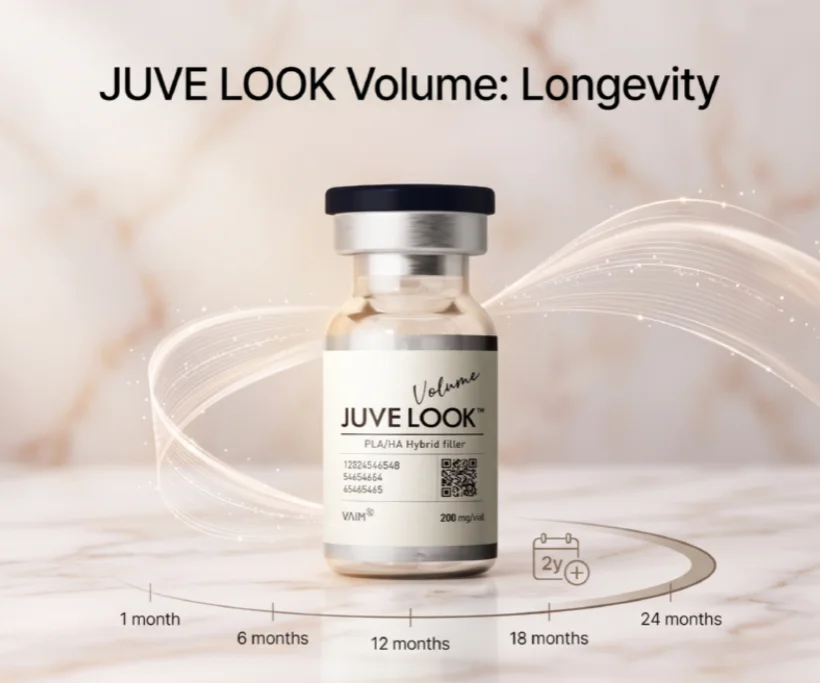
Instead, I emphasize its longevity. Once your own collagen builds up, that volume stays with you for a long time. Based on my experience of performing over 5,000 vials in the Gangnam area, let’s dive into how long Juvelook Volume actually lasts and how you can maximize its duration.
Comparison: Longevity at a Glance
Treatment | Expected Duration |
Dermal Filler | Approx. 1 Year |
Juvelook Volume | 2 Years or More |
💡 Related article: The Essential Guide to Juvelook Volume: Results, Costs, and How to Avoid Side Effects
The Biological Timeline of Juvelook Volume
Immediately After Treatment
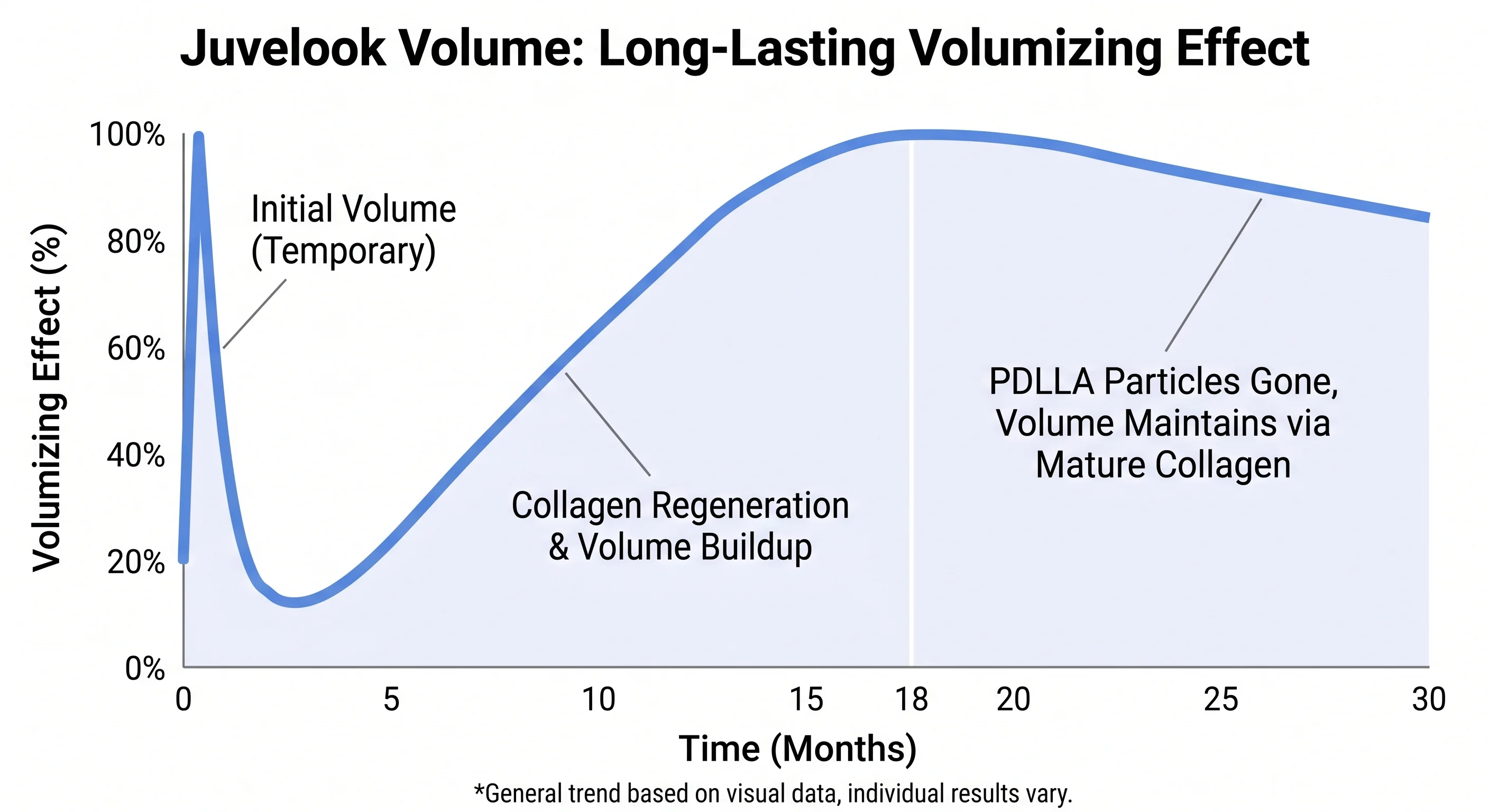
You will see an immediate boost in volume right after the procedure. However, this is a "temporary volume" caused by the saline solution mixed with PDLLA particles. This usually gets absorbed and disappears within 2 to 3 days.
Note: Some patients worry that the effect has vanished after 3 days, but in reality, the true collagen-building process hasn't even started yet!
2 to 18 Months (The Golden Period)
The injected PDLLA particles stimulate fibroblasts to induce collagen synthesis. This process can continue for up to 18 to 24 months. Essentially, while the Juvelook particles are gradually broken down and excreted, they are replaced by your actual, natural tissue.
After 18 Months
By this stage, most of the PDLLA particles have decomposed. What remains is mature Type 1 collagen, which maintains the facial volume long-term.
What the Research Says
While specific long-term studies on Juvelook Volume's active ingredient (PDLLA) are still emerging, we can look at studies on PLLA, a very similar substance.
In a study where 28 women received PLLA treatments, 3D imaging was used to track objective volume changes. The results showed that even 2 years later, all subjects maintained a volume increase ranging from 0.75cc to 6.4cc.
 <53-year-old woman, 2 years after PLLA procedure>
(Source: Poly-L-Lactic Acid in Facial Rejuvenation: Volumetric Data Supporting Regenerative Outcomes)
Real Patient Progress at ODE clinic
Here are actual progress photos of patients who received Juvelook Volume at ODE clinic. (Photos are shared with the patient's explicit consent.)
CASE 1. 50-year-old Female (2.5 years after 3 sessions)
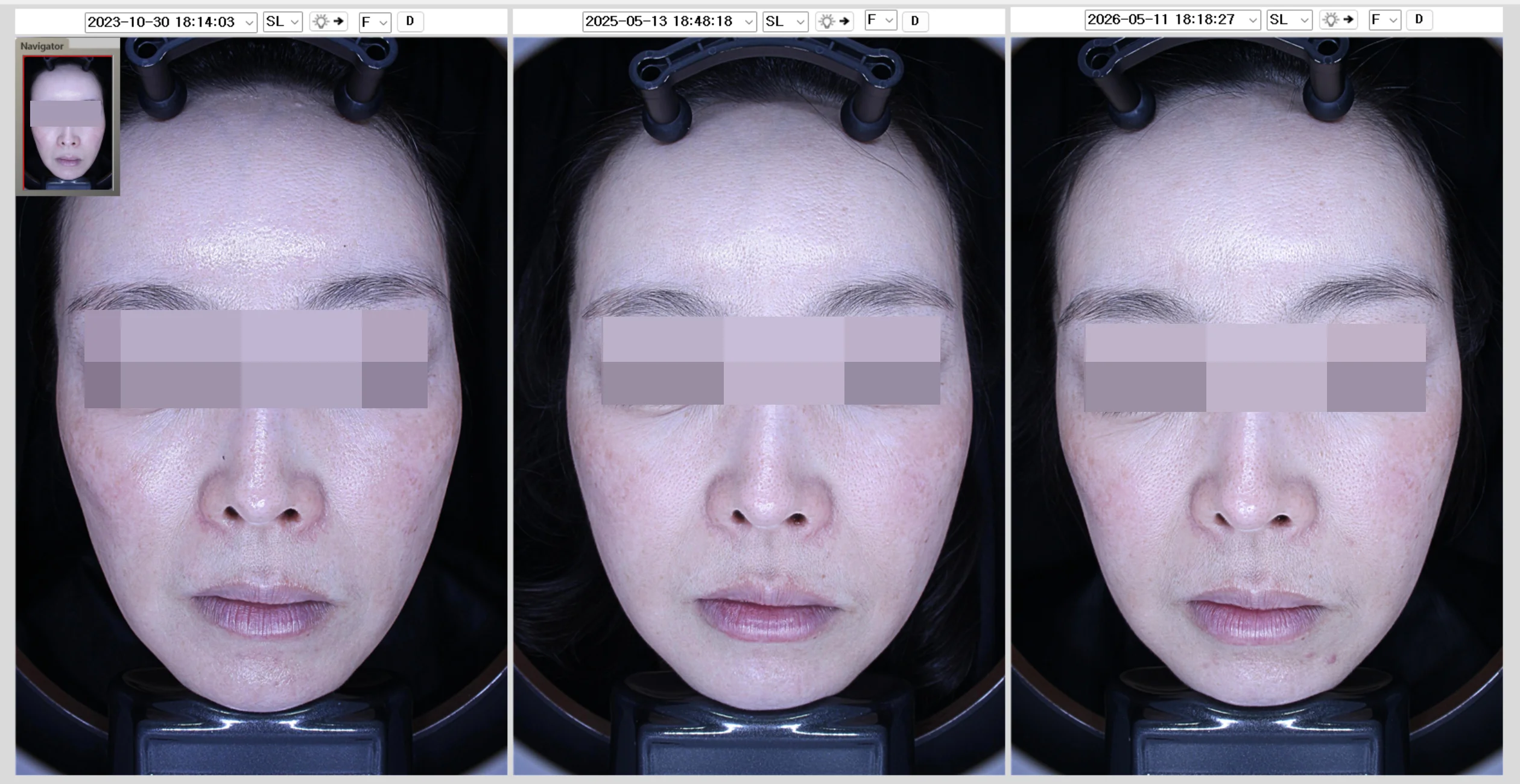 Left: Oct 30, 2023 (Before)
Center: May 13, 2025 (1.5 years after 3 sessions)
Right: May 11, 2026 (2.5 years after 3 sessions)
The volume was well-maintained up to the 1.5-year mark. By the 2.5-year mark, it appears that about 50% of the volume has naturally diminished.
CASE 2. 28-year-old Female (1.5 years after 3 sessions)
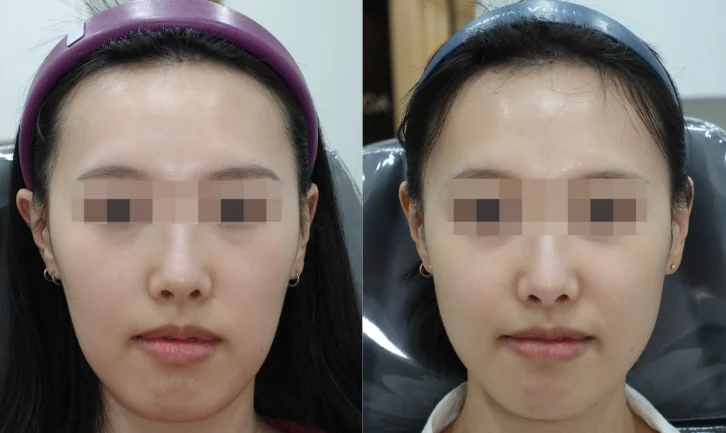 Left: Feb 8, 2024 (Before)
Right: July 14, 2025 (1.5 years after 3 sessions)
In this case of a patient in her 20s, the volume remains almost fully intact even after a year and a half.
Factors That Influence Longevity
(1) Age
The younger you are, the higher your capacity for collagen production and the slower the rate of degradation. Therefore, younger patients tend to see better results and longer-lasting effects.
In my clinic, I usually recommend a touch-up every 2 years for those in their 20s and 30s, and every 1.5 years for patients over 40.
(2) Synergy with EBD (Energy-Based Devices)
RF (Radiofrequency) signals are another powerful way to trigger collagen synthesis. Combining Juvelook Volume with RF treatments like Thermage, Density, or XERF amplifies the collagen production signal, leading to more dramatic results and increased longevity.
Final Thoughts
Ultimately, there is no "fixed" expiration date for Juvelook Volume. Beyond the factors mentioned above, individual differences in genetics and metabolism play a huge role in how fast collagen is synthesized and broken down.
Rather than sticking to a rigid schedule, I recommend visiting a clinic when you feel the volume has slightly dipped. By comparing your current state with previous diagnostic photos and consulting with your doctor, you can decide on the perfect timing for a maintenance session. (Of course, it's best to find a clinic where the performing physician provides direct consultation using professional skin analysis imaging.)