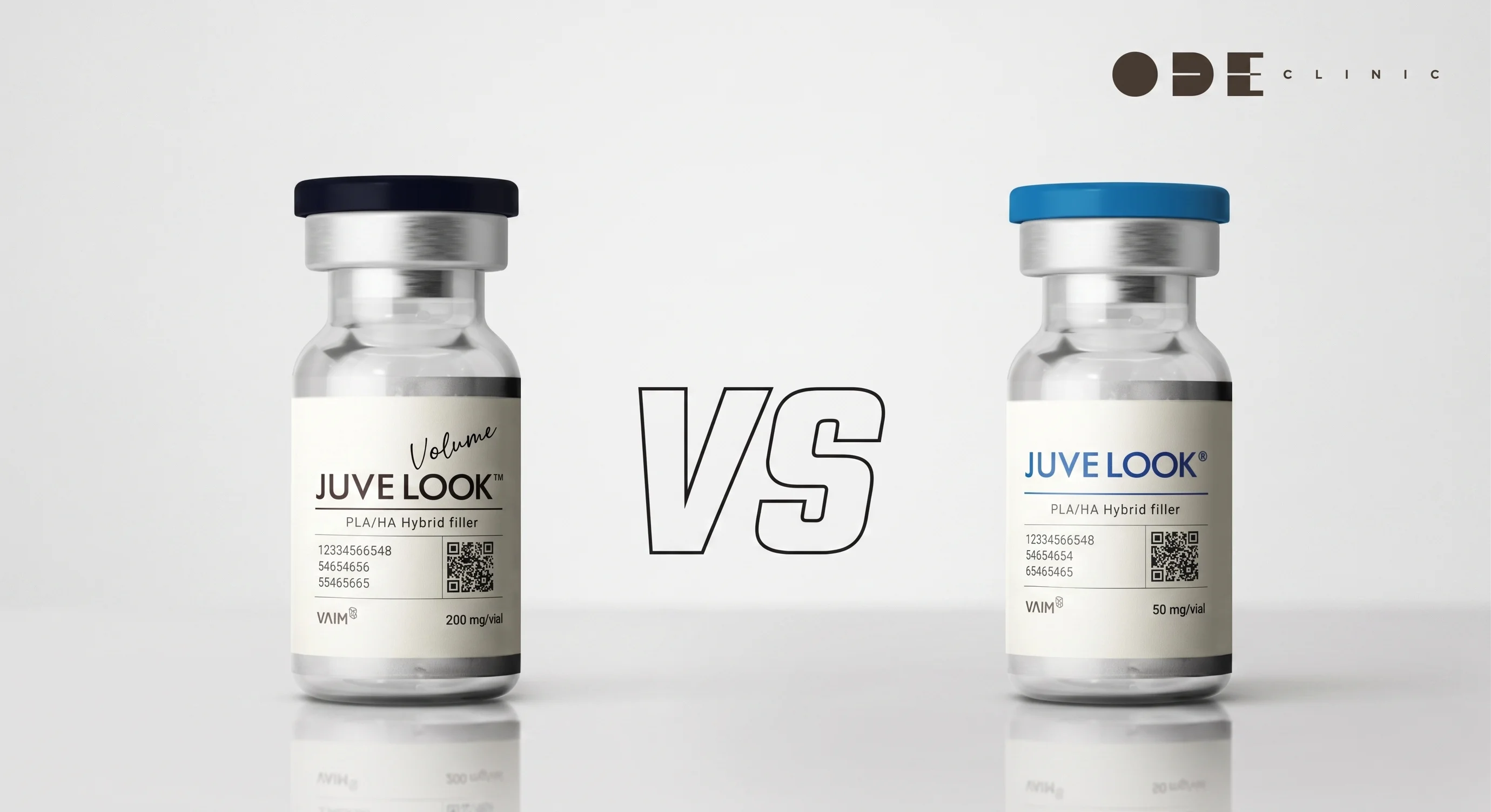
Re2O vs. Rejuran vs. Juvelook: Which Skin Booster is Right for You? | ODE clinic
Re2O vs. Rejuran vs. Juvelook: Which Skin Booster is Right for You? | ODE clinic
May 11, 2026
First published / Last modified

Table of Contents
Re2O: The Next-Gen Human-Derived Skin Booster
Hello, I’m Dr. Do hoon Kim from ODE clinic. It is no exaggeration to say that the current skin booster market is obsessed with Re2O. With the rise of hADM (human Acellular Dermal Matrix) treatments like Re2O, CellREDM, and Juvacell, many patients are curious about how they differ from established favorites like Rejuran or Juvelook.
Today, I’ll share my clinical experience regarding the actual effects of Re2O, the different injection methods, and how it stacks up against Rejuran and Juvelook.
Updated: May 11, 2026, by Dr. Do hoon Kim, ODE clinic
💡 Related article: Gangnam, Seoul Re2O Cost (Price), Efficacy, and Injection Methods
Re2O: A First-of-Its-Kind Skin Booster
Re2O is the first Acellular Dermal Matrix (hADM) skin booster. That sounds a bit technical, doesn't it? To put it simply, it takes actual human skin tissue and removes all components that could cause an immune rejection. What’s left behind are the pure structural elements of the skin: Collagen, Elastin, and GAGs.
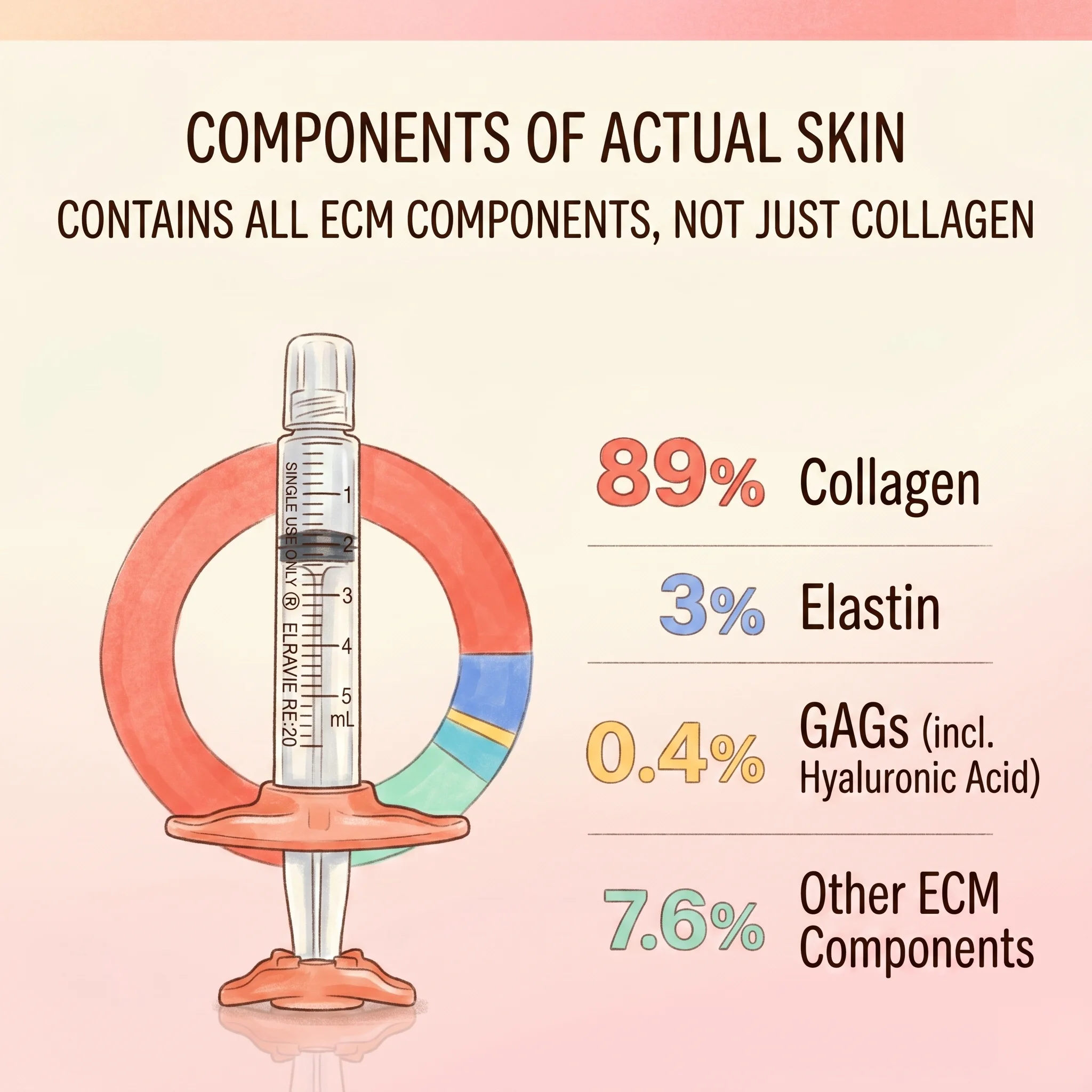 Re2O Composition:
Collagen: 89%
Elastin: 3%
GAGs (including Hyaluronic Acid): 0.4%
Other ECM components: 7.6%
What happens once Re2O is in your skin?
When hADM is injected, it acts as a "scaffold" or a microscopic mesh within the skin. This provides an immediate boost to skin density and creates an ideal environment for your native fibroblasts (the cells that build your skin) to move in and start working.
As the hADM is slowly absorbed, the new collagen produced by your fibroblasts leaves your skin firmer, thicker, and more resilient. 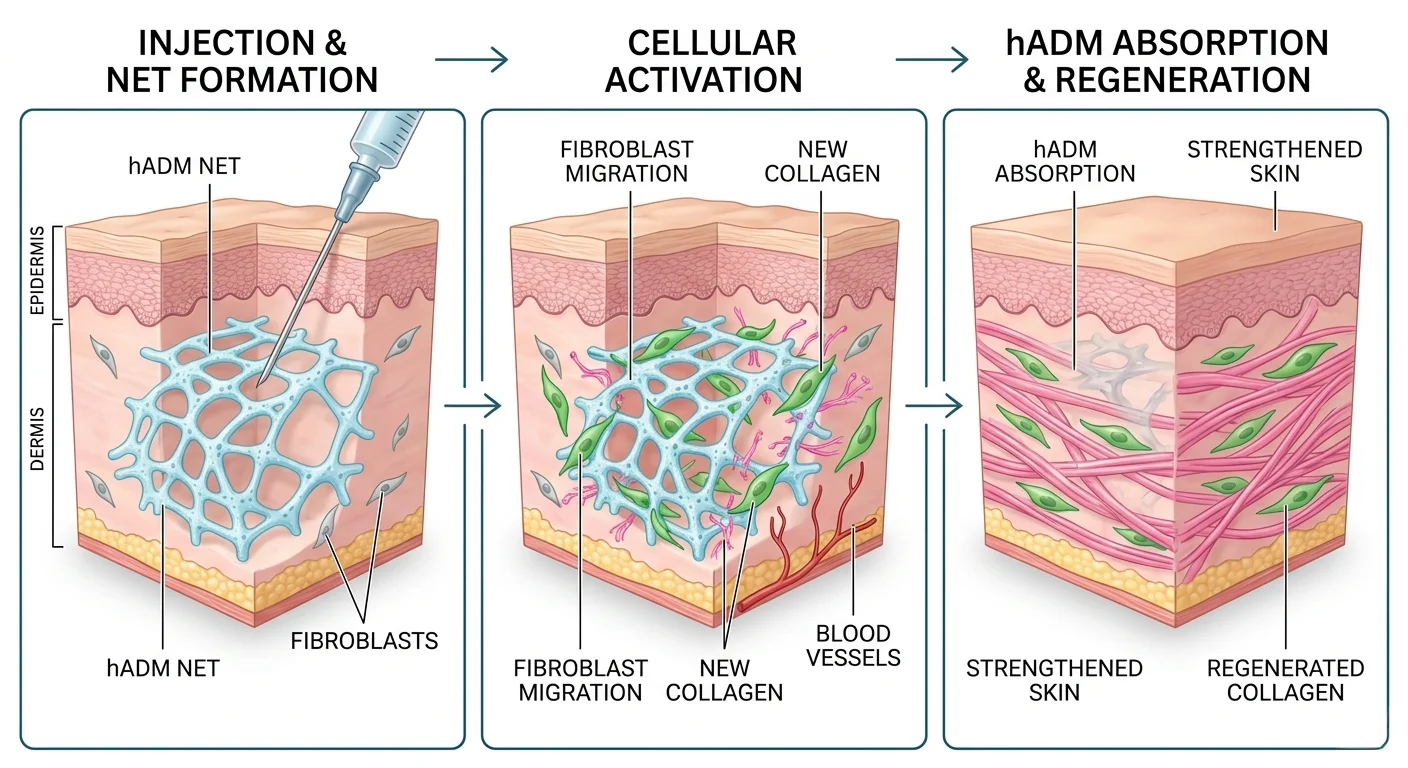 In short, Re2O rebuilds your skin’s structure, leading to simultaneous improvements in texture, pores, fine lines, and elasticity.
"Wait, don't boosters like Juvelook already stimulate collagen?"
Yes, they do. However, most existing boosters—based on PLA, PDO, or PCL—are made of synthetic polymers. While effective, they are man-made materials.
Re2O, on the other hand, is derived from actual human tissue. This allows for a more "natural" integration with your skin, often leading to faster and more noticeable results with a high safety profile. I’ll go into a more detailed comparison with Juvelook further down.
Real Clinical Results (Before & After)
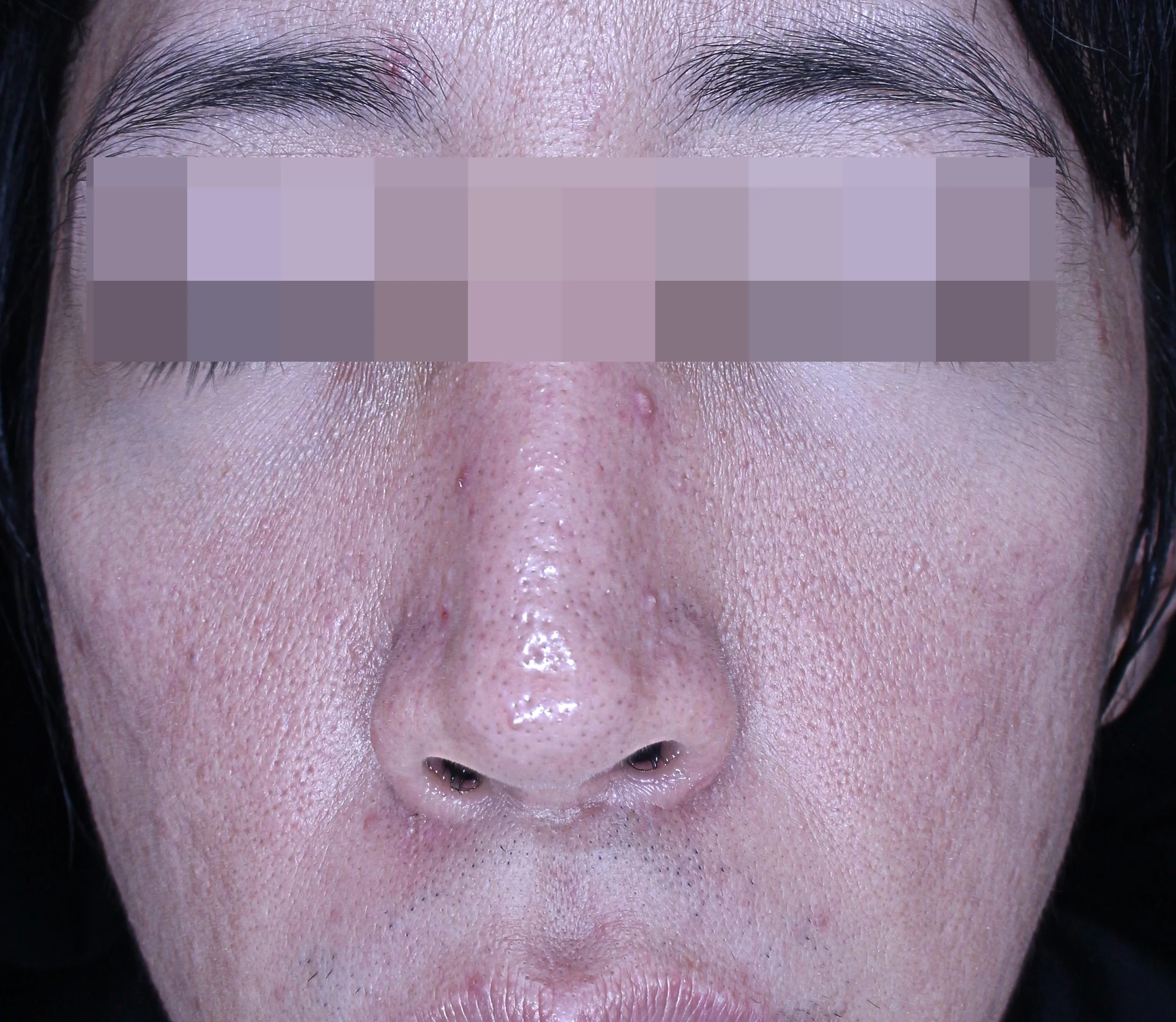
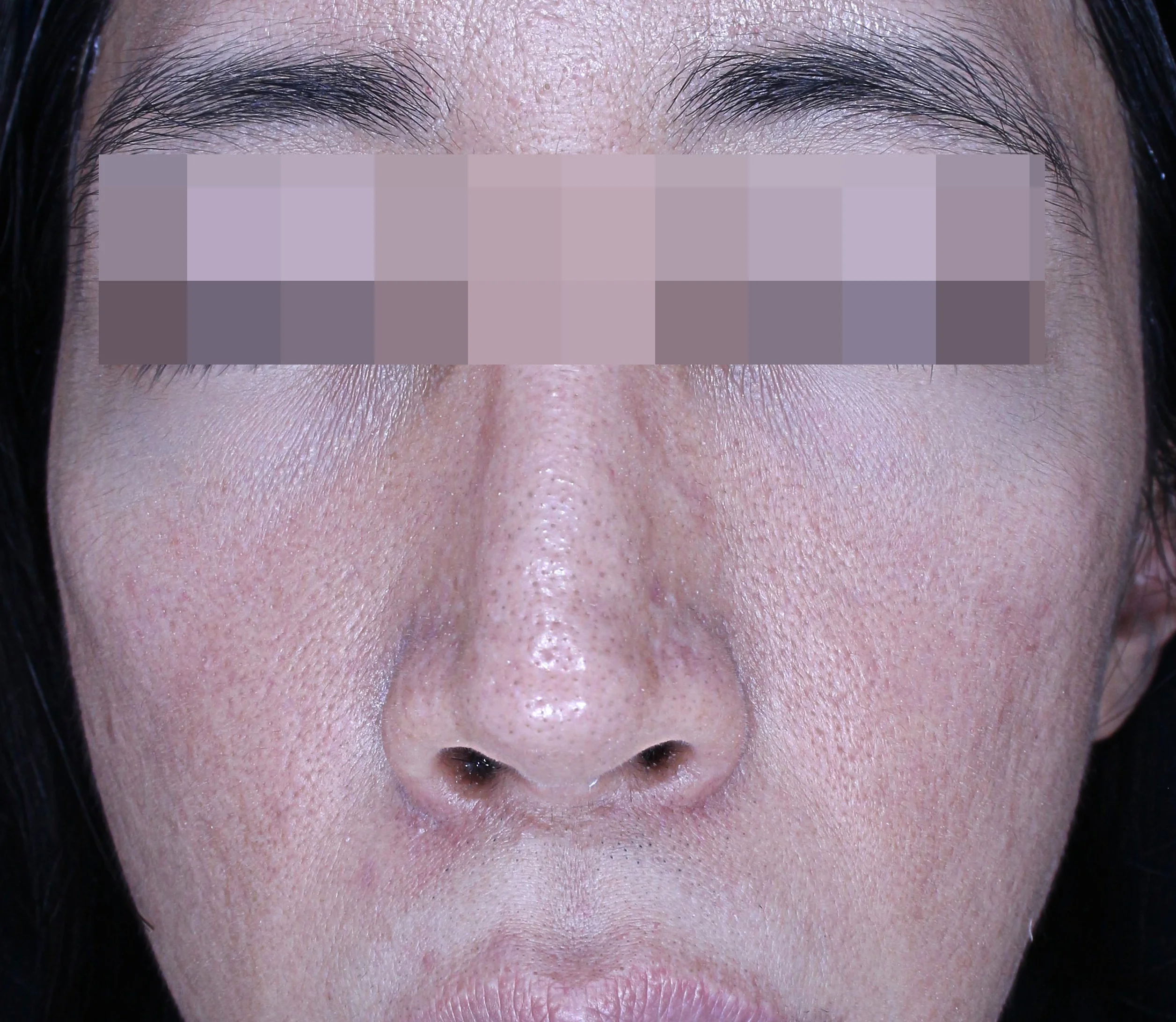
Below are the results of a patient at our clinic who received three Re2O sessions at one-month intervals.
<Before>
<After>
In this case, we used a cannula to perform three sessions every four weeks. You can clearly see a significant reduction in pore size and fine lines, and the overall skin texture has become much smoother. Even six months after the final session, the results remain well-maintained.
Choosing Your Injection Method
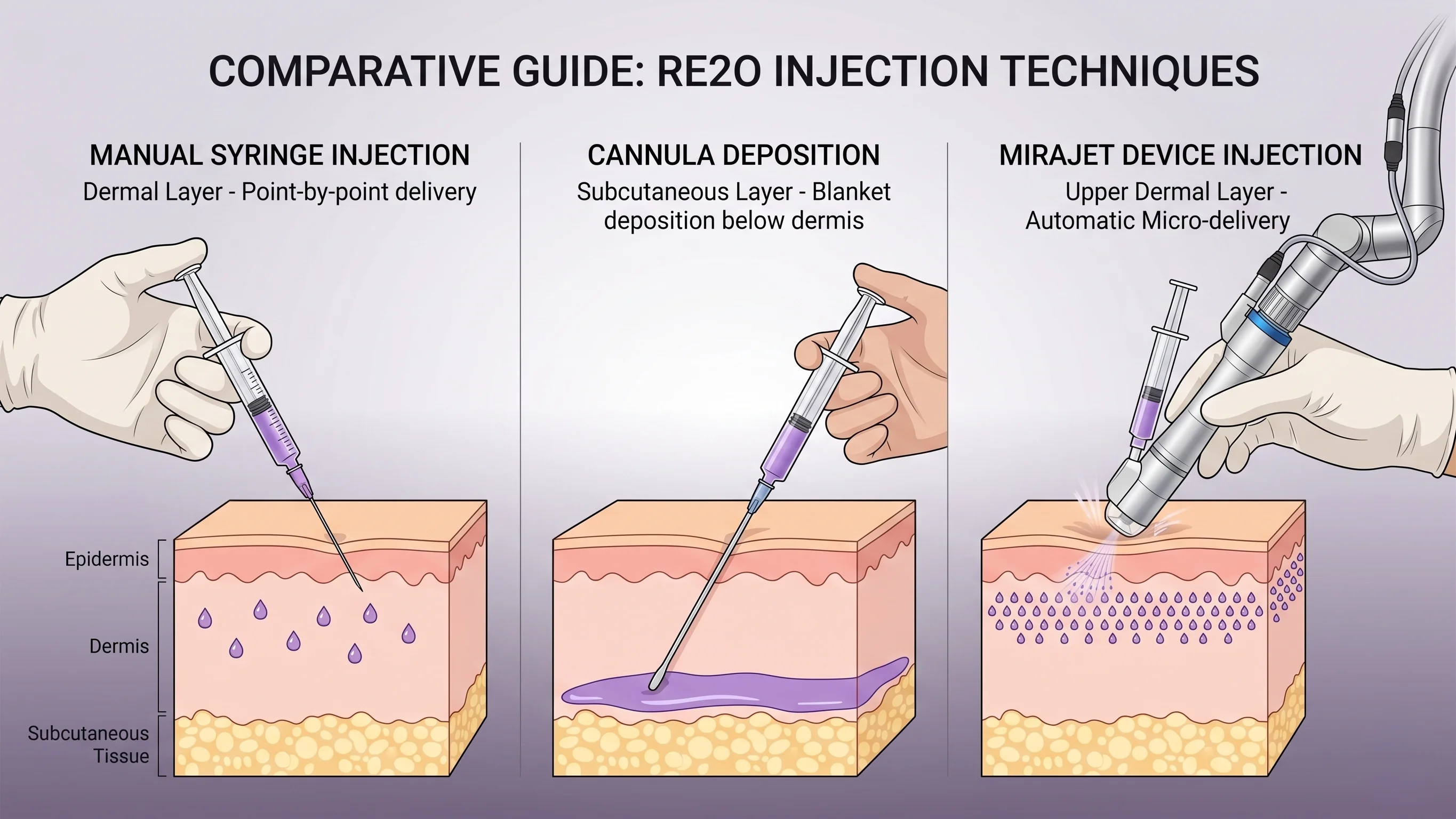
There are generally three ways we administer Re2O. The "best" method depends entirely on your specific skin concerns.
1. Manual Hand-Injection
Directly injecting Re2O into the dermis with a fine needle.
Pros: Minimal product waste; allows for extremely detailed work on specific areas.
Cons: Higher risk of temporary "lumping," more pain, and a higher chance of bruising compared to machine-assisted methods.
2. Cannula Injection
Using a blunt-tipped tube (cannula) to spread the product evenly under the skin.
Pros: Significant reduction in pain and bruising; minimal product loss.
Cons: The product often settles in the subcutaneous fat layer rather than the dermis. This makes it better for overall elasticity and subtle volume rather than surface-level texture or pores.
Note: If injected via cannula without considering the patient's face shape, it can lead to a "puffy" look, which is a common complaint in some reviews.
3. Mirajet
Using high-speed jet pressure to deliver Re2O into the upper dermis without needles.
Pros: The gold standard for improving skin texture, pores, and fine lines. It ensures very even distribution.
Cons: Requires specialized equipment (not available everywhere) and may involve additional costs.
Method | Best For | Pros | Cons |
Hand-Injection | Targeted Areas | Precision | Pain, Bruising |
Cannula | Elasticity / Volume | Low Pain | Limited Areas |
Mirajet | Pores / Texture | Maximum Efficacy | Higher Cost |
Re2O vs. Rejuran vs. Juvelook
(1) Re2O vs. Rejuran
Re2O focuses on structural issues like density and pores. Rejuran, made of PN (polynucleotide) from salmon DNA, acts as a "healing" booster. It focuses on skin repair, calming inflammation, and fixing "inner dryness" by balancing oil and moisture.
(2) Re2O vs. Juvelook
Juvelook stimulates fibroblasts to produce collagen indirectly—think of it as sending a "signal" to start building. It offers similar benefits to Re2O but is often used as a more cost-effective option or used in tandem with Re2O to create a synergistic effect.
(3) The Summary Metaphor
If we imagine your skin as a construction site:
 Rejuran is the Energy Drink for the workers (cellular regeneration).
Juvelook is the Site Supervisor giving the orders (signaling collagen synthesis).
Re2O is the Steel Framework (providing the actual structure).
Re2O FAQ
Q: How many sessions do I need?
A: While it varies, I generally recommend 3 sessions for visible, long-lasting improvement in skin density.
Q: Is it safe since it’s derived from donor tissue?
A: Re2O is manufactured by L&C Bio, a company certified by the American Association of Tissue Banks (AATB), under strict quality control. To date, the incidence of nodules or adverse reactions has been reported to be lower than many synthetic boosters.