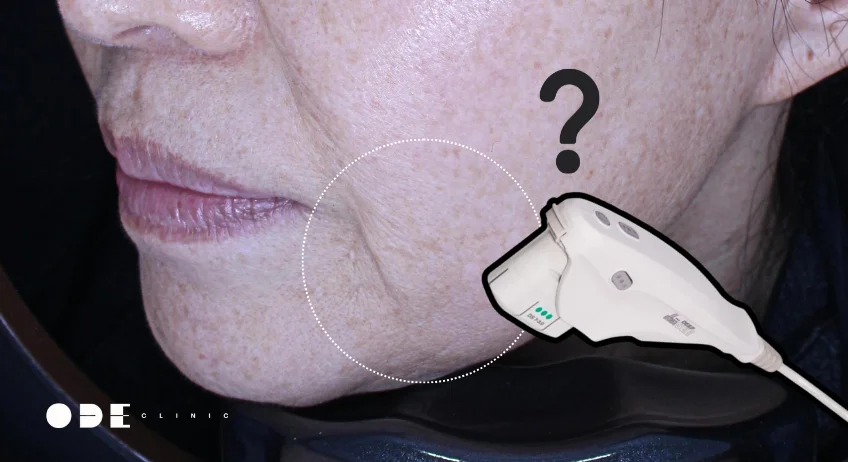
How Often Should You Get Ultherapy? A Guide to Optimal Frequency and Shot Counts
How Often Should You Get Ultherapy? A Guide to Optimal Frequency and Shot Counts
April 6, 2026
First published / Last modified
Table of Contents
With the growing number of dermatology clinics and more competitive pricing, anti-aging procedures have become a staple in many people’s regular self-care routines.
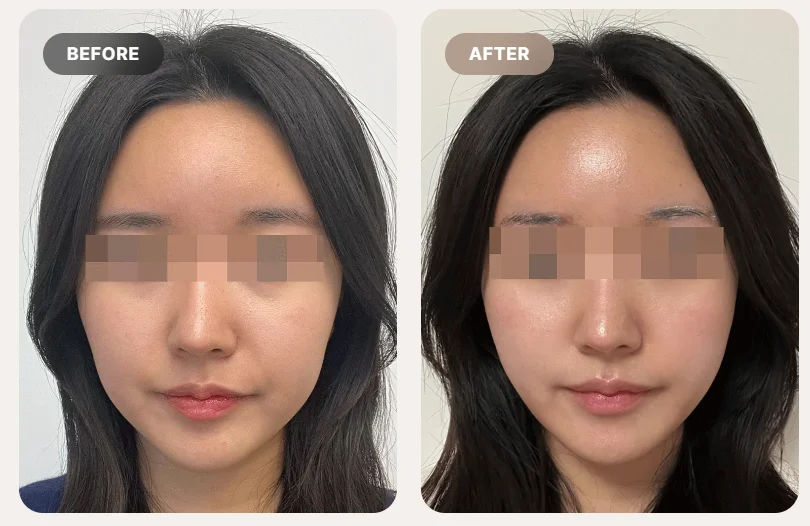
One of the most frequent questions I get asked is: "How often should I get Ultherapy?"
While the duration of the effect is a major factor, the ideal interval depends on a combination of factors, including age and the patient's specific goals. Today, I’ll break down the theoretical vs. actual maintenance period of Ultherapy, along with the recommended shots and frequency for different needs.
Updated: April 6, 2026 By Dr. Do-hoon Kim, Chief Dermatologist at ODE Clinic
💡 Related reading: [2026 Guide] Ultherapy treatment reviews : Before & After, Cost, and Comparison with Thermage
Ultherapy Maintenance: Theory vs. Reality
The Theoretical Background
During an Ultherapy session, ultrasound energy creates Thermal Coagulation Points (TCPs) deep within the skin layers. This triggers a wound-healing response where fibroblasts are activated, leading to collagen regeneration over 1 to 3 months. Following this, there is a period where the newly formed collagen fibers intertwine and strengthen.
Theoretically, the results of Ultherapy should last 1 to 1.5 years. However, in practice, patients often feel the need for a follow-up sooner. Why is that?
The Reality: 6 to 12 Months
As we age, we continuously lose collagen and face the unrelenting pull of gravity. Think of Ultherapy as a "tug-of-war" between the lifting effect of the procedure and the natural aging process.
Usually, after the 6-month mark, the rate of natural aging begins to outpace the lifting effect, and the face gradually returns to its pre-treatment state. Furthermore, modern lifestyle factors—such as UV exposure, smoking, poor sleep quality, and stress—accelerate aging and shorten the maintenance period to roughly 6 months to a year.
Factors That Determine Your Ultherapy Interval
I believe two factors are most critical when deciding on a schedule:
Age
Patient Goals: Cost-effectiveness vs. Maximum Results
1. Age
The younger the patient, the higher their capacity for collagen regeneration. Therefore, even with a standard 300-shot treatment, younger patients often see more dramatic and longer-lasting results compared to older patients.
2. Cost-effectiveness vs. Maximum Results
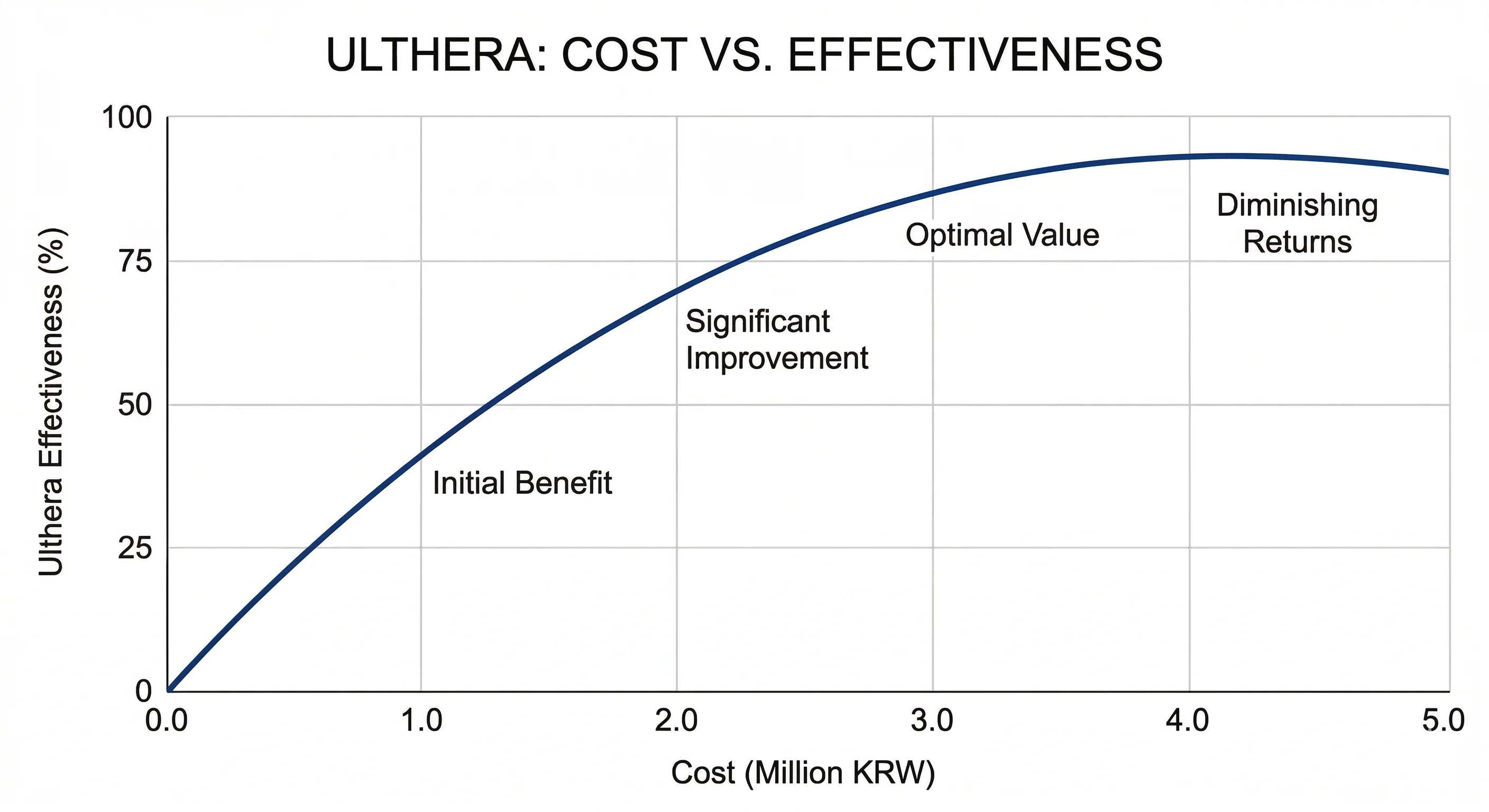
If we were to graph the "Effect vs. Cost" of Ultherapy, it would follow a quadratic function. Up to a certain point, satisfaction increases significantly with the number of shots, but after that, the marginal utility (extra benefit) begins to diminish.
Value-Oriented: Some patients choose a shot count and interval that maximize the "bang for their buck."
Result-Oriented: Others prioritize the best possible aesthetic outcome regardless of the cost.
Recommended Ultherapy Intervals
Goal | Age: 20s – 40s | Age: 50s and Above |
Value (Cost-effective) | Every 12 months | Every 9 months |
Maximum Results | Every 9 months | Every 6 months |
How to Maximize Ultherapy Results
If repeating full Ultherapy sessions frequently is a burden, you can extend and enhance the results using these strategies:
1. The "Touch-up" Method
Suppose a patient in their 50s requires 600 shots. Receiving 600 shots every 6 months can be intense. Instead, we can perform a full 600-shot treatment initially, followed by a 300-shot "touch-up" 6 months later to target specific areas of concern. The full treatment is then repeated another 6 months after the touch-up.
2. Combination Therapy (Multi-layer Lifting)
By combining Ultherapy (which targets the 3.0mm and 4.5mm layers) with treatments that use different mechanisms, we can strengthen multiple layers of the skin.
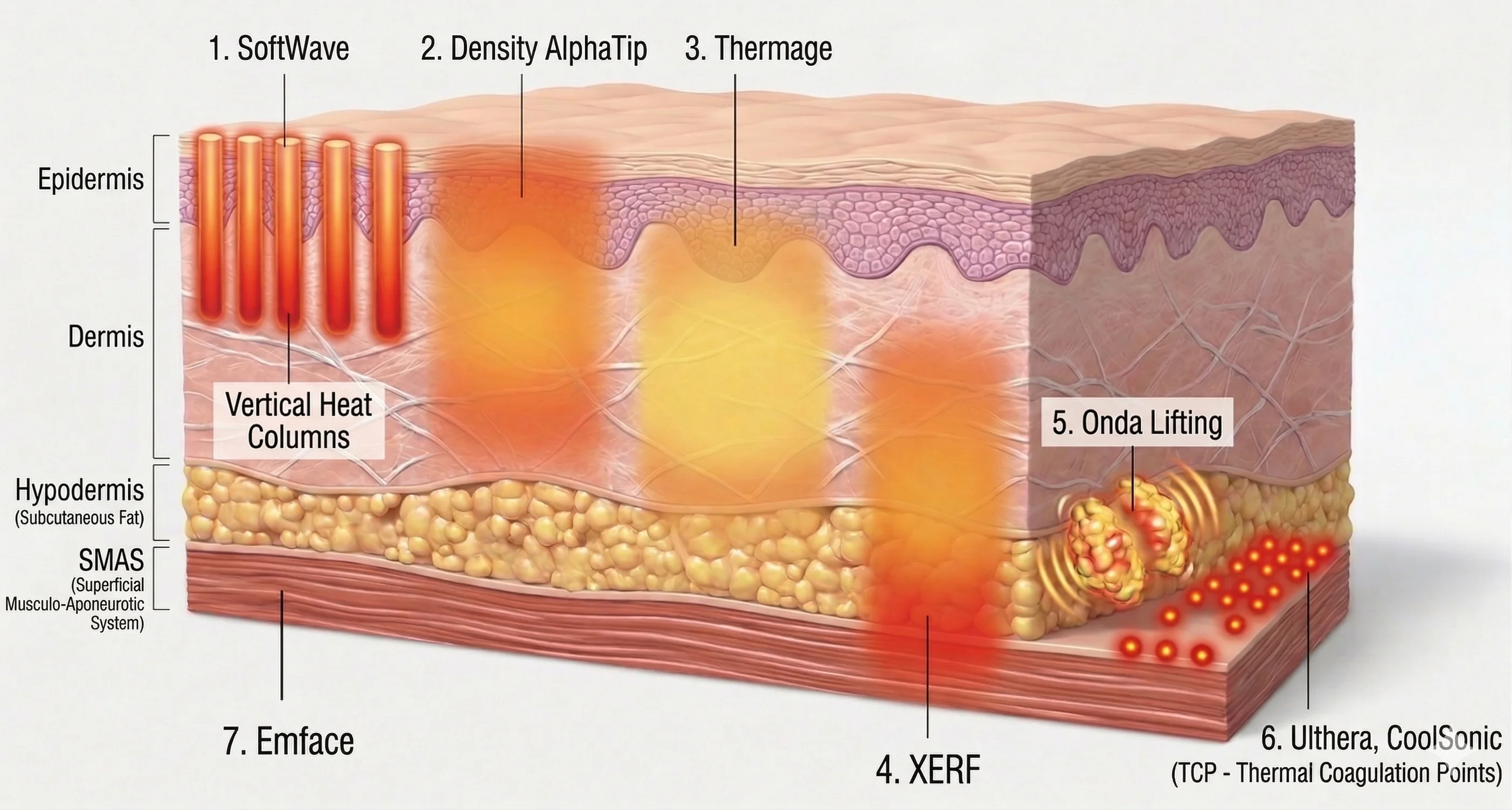
Xerf (RF): Radiofrequency for skin tightening.
Onda: Microwave technology for contouring.
EMFACE: Targets the muscle layer for structural support.
In my clinic, I often advise patients that diversifying the mechanism of lifting is more effective than simply repeating the same procedure over and over.
Ultherapy: 300 Shots vs. 600 Shots
Deciding on the number of shots is relatively straightforward: the more sagging there is, the more shots are required. Within a certain range, a higher shot count yields better results.
Mild Sagging (20s–30s): 200 to 400 shots.
Moderate to Advanced Sagging (40s+): 300 to 600 shots.
Note: Adjustments are always made based on the treatment area, skin thickness, and facial volume.
Conclusion: Consult an Expert
Rather than deciding on a shot count or frequency alone, it is vital to find a clinic where you can have a 1-on-1 consultation with the performing physician. A customized plan based on a direct diagnosis of your skin's condition will always yield the best results.
Remember: "More is not always better." The goal is to find the optimal balance for your face.
I hope this guide helps you plan your journey to youthful skin!
Best regards, Dr. Do-hoon Kim (ODE Clinic)