Density RF Treatment : Cost, Results & vs. Thermage
Density RF Treatment : Cost, Results & vs. Thermage
April 13, 2026
First published / Last modified
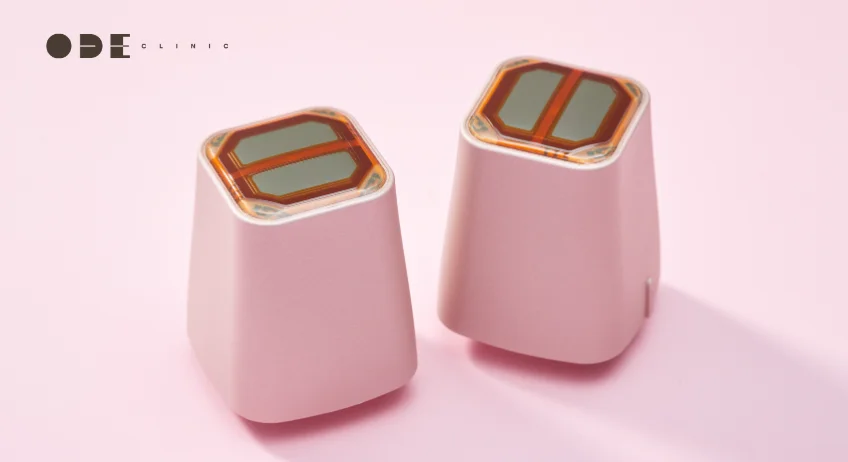
Table of Contents
Density RF Treatment: Benefits, Real Cost, and How It Compares to Thermage
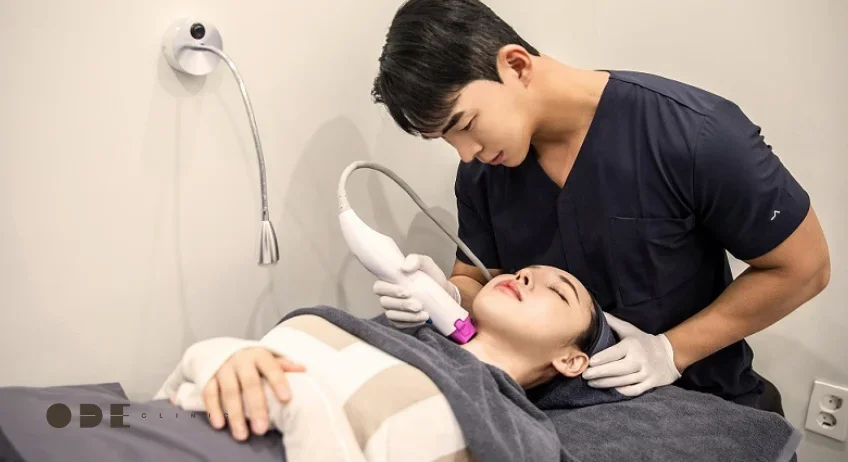
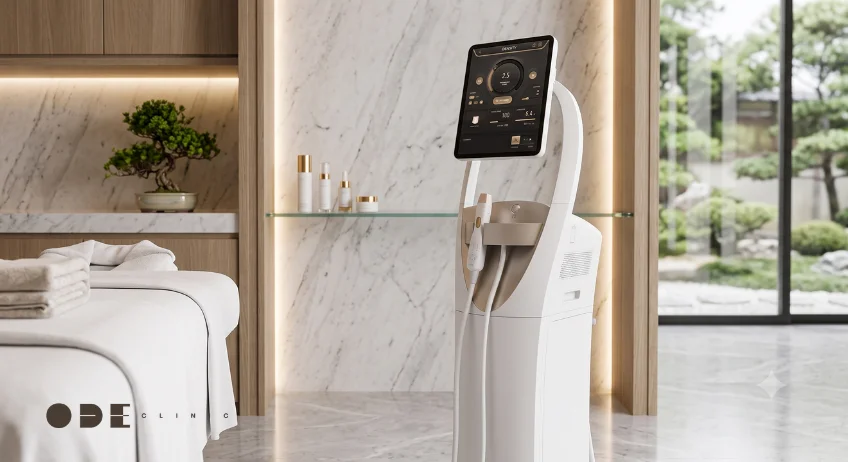
Density RF treatment is a monopolar and bipolar radiofrequency (RF) skin-tightening procedure that has become one of the most requested Thermage alternatives in Korea. Below, I break down what Density actually does to your skin, how the new Alpha tip differs from the Classic tip, what it costs in Seoul in 2026, and — the question I get asked in my consultation room almost every day — whether it is genuinely comparable to Thermage FLX.
Monopolar RF treatments, led by Thermage, are often described as a savings account for your skin. They don't only deliver an immediate elasticity boost; over years, they slow the visible pace of aging. Korea now has a number of RF devices in this category, and among them Density stands out for its build quality and clinical consistency.
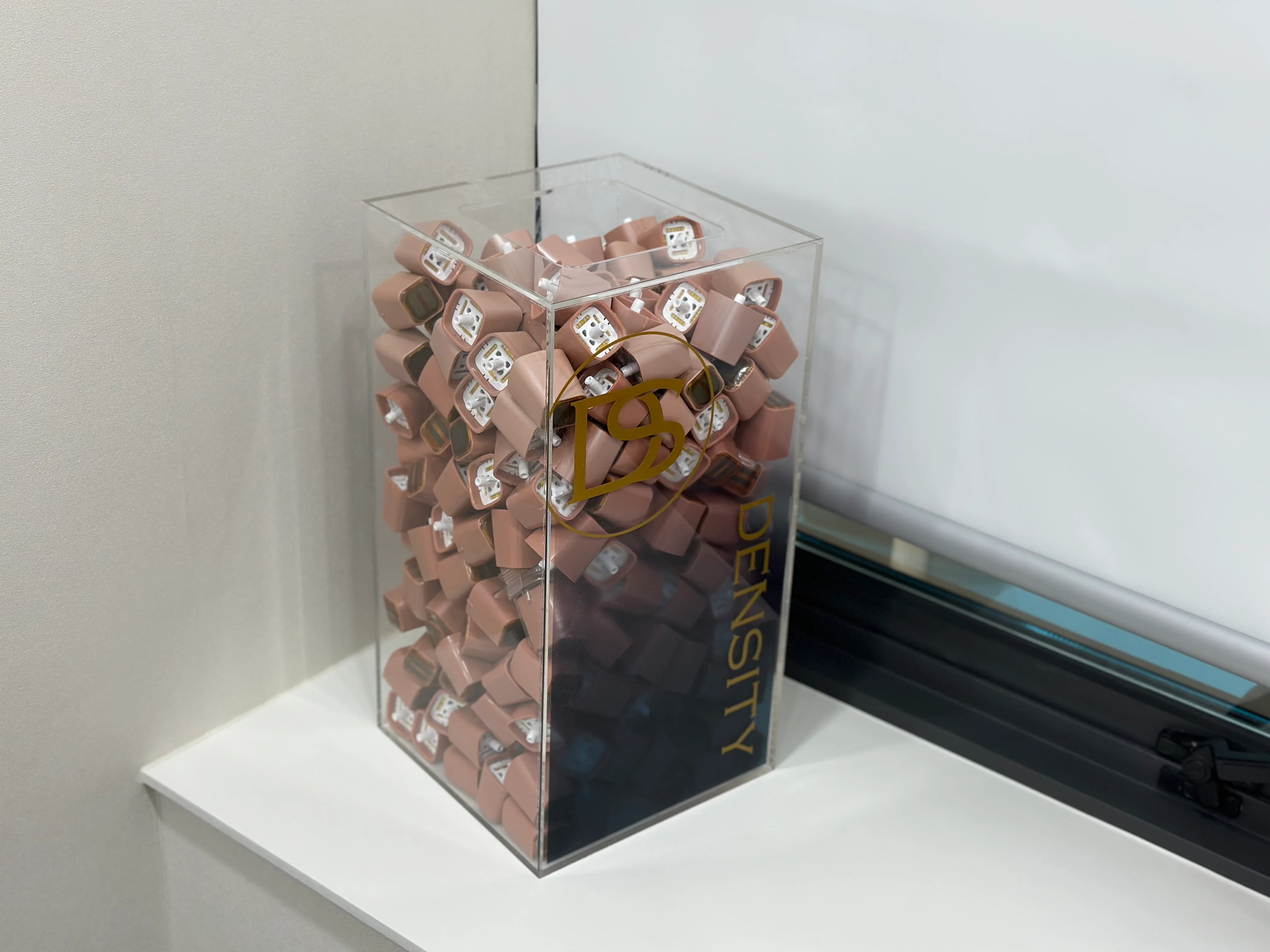 <ODE Clinic Density Tip Usage Amount>
💡 Related reading: Thermage vs Density vs XERF: Effects, Pricing, and Key Differences
What Is Density RF Treatment?
Density is an anti-aging device that heats the dermis with high-frequency energy to trigger collagen remodeling. The key point most patients miss: Density is designed for tightening, not lifting.
Lifting (e.g., Ultherapy): targets deeper layers and the SMAS to pull sagging facial contours upward.
Tightening (e.g., Density, Thermage): contracts and strengthens loose collagen fibers inside the skin so the surface feels firm and taut.
They solve different problems, which is exactly why many of my patients schedule Ultherapy and Density (or Thermage) as a pair for full rejuvenation rather than choosing one over the other.
It's also worth saying plainly: most patients who still look youthful in their 50s and 60s are not the ones chasing a single dramatic lift after everything has already sagged. They're the ones who quietly received one RF treatment per year for a decade. Over five to ten years, the gap between someone who invests in their skin annually and someone who doesn't becomes very hard to close.
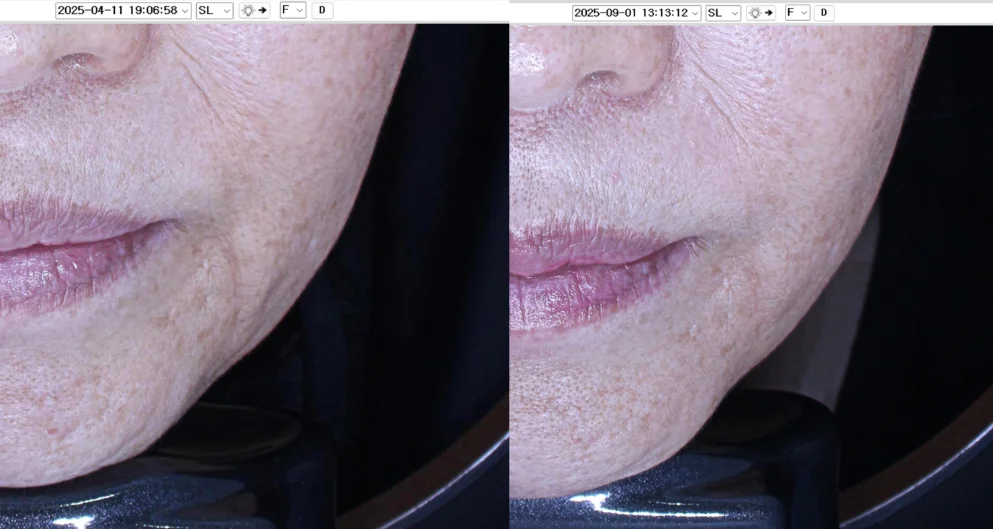
Before & After: Density Classic, 600 shots. Per Korean medical advertising law, before-and-after photos are viewable after login.
Density Alpha Tip vs. Density Classic Tip
Density launched with a monopolar-only Classic tip. The newer Density Alpha tip is a different proposition, and the difference comes down to three things.
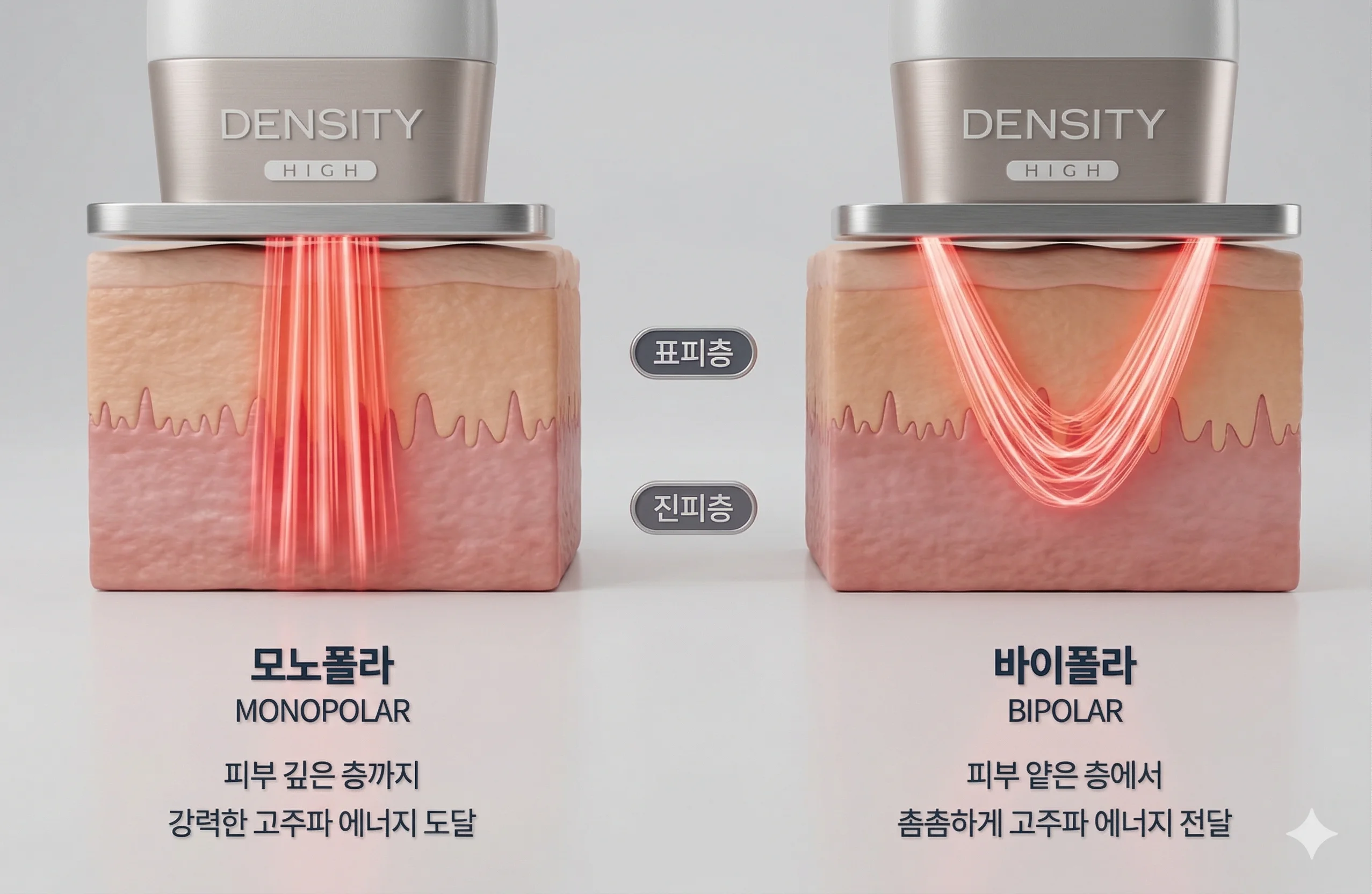
1. Monopolar + bipolar RF in sequence
The Alpha tip fires monopolar RF and then bipolar RF sequentially. Monopolar energy reaches the deep dermis; bipolar energy spreads evenly through the shallower layers — the same principle behind contact devices like InMode FORMA.
Combining both means energy is delivered without gaps from the upper dermis down. In practice, that translates to what patients notice first: visible improvement in fine wrinkles, pores, and skin texture, on top of the deep elasticity change.
2. A larger electrode delivers more total energy
A common criticism of the earlier Density High tip was that the total energy delivered felt underwhelming. The Alpha tip's larger electrode surface allows a meaningfully higher energy load per session, which matters because RF results are dose-dependent.
3. The research behind the monopolar → bipolar order
This isn't just marketing sequencing. An aged-animal-skin study compared four irradiation orders:
Condition | Sequence |
|---|---|
MM | Monopolar → Monopolar |
MB | Monopolar → Bipolar |
BM | Bipolar → Monopolar |
BB | Bipolar → Bipolar |
Collagen and elastin synthesis was highest in the MB group. The proposed mechanism: monopolar RF raises tissue temperature, tissue impedance drops, and the following bipolar energy is then absorbed more efficiently.
References:
So at an equivalent total energy dose, there is a theoretical basis for the Alpha tip outperforming monopolar-only devices. I'd stress theoretical — the device is new enough that clinical data in real patients is still accumulating.
Density vs. Thermage: 4 Real Differences
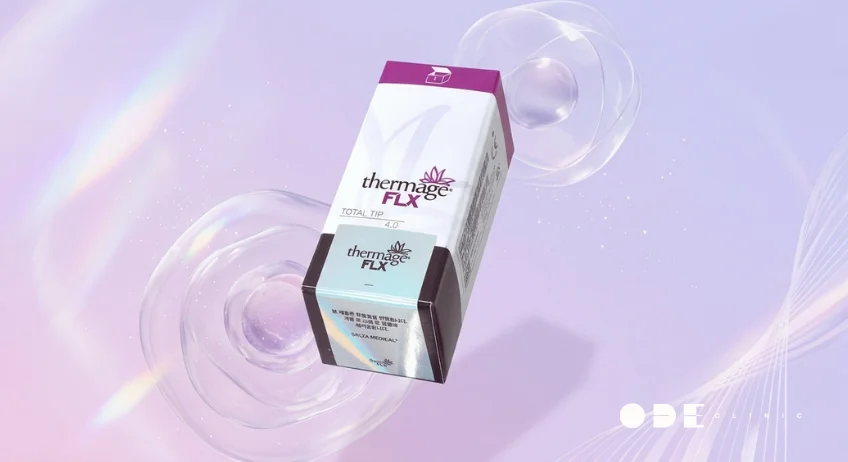
Mechanically, these two devices are close cousins. Operating principle, cryogen cooling, tip sizes — all very similar. Here's where they actually diverge.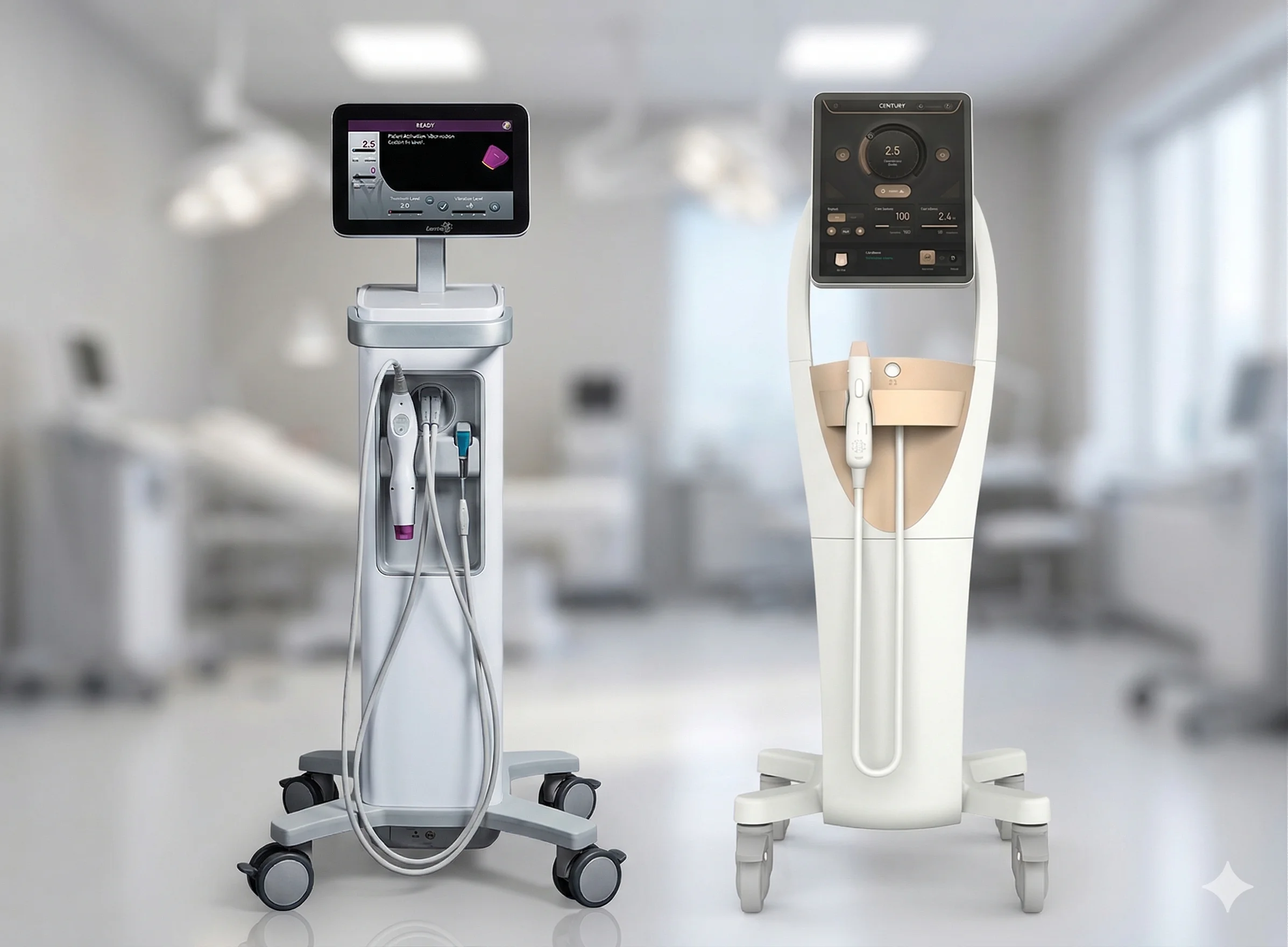
Density Alpha | Thermage FLX | |
|---|---|---|
RF type | Monopolar + bipolar (sequential) | Monopolar only |
Depth coverage | Deep + superficial dermis | Deep dermis |
Time (600 shots) | ~25–30 min | ~40 min |
Cooling | 10-step pulse cooling | Cryogen spray cooling |
Price (600 shots) | ₩1.8–2.0M | ₩2.0–2.5M |
Clinical data | Limited (recent launch) | Decades of published data |
1. Superficial-layer coverage
Thermage and the Density Classic tip use monopolar RF alone. The Alpha tip adds bipolar RF, so heat delivery across deep and shallow layers is more seamless — which is usually why Alpha patients report faster visible changes in texture and glow.
2. Cost
Thermage consumables are expensive, and that cost is passed to the patient. Density Classic typically runs about 60% of a Thermage session; the Alpha tip lands around 80%. For patients who want premium-tier results without the brand-name premium, that's a real argument.
3. Treatment time and comfort
Density is a high-output device, so it isn't painless — expect discomfort comparable to Thermage. But it's faster: roughly 25–30 minutes for 600 shots versus about 40 minutes for Thermage FLX, and the 10-step pulse cooling system keeps each pass tolerable. A shorter session is, for most people, a materially better experience.
4. Evidence base — and my honest answer
Here is the part most blog posts skip. There is no head-to-head study comparing Thermage and Density Alpha in real patients. Anyone claiming a definitive winner is working from feel, not controlled data — and feel is not a variable I'm willing to charge patients for.
The price gap is only about ₩300,000–400,000 for 600 shots. So the honest question is: "Is Thermage ₩300,000–400,000 better than Density Alpha?" I can't answer that for you, and neither can anyone else right now.
What I tell my own patients:
Try both. Thermage this year, Density Alpha next year — or the reverse.
Don't judge by feel. Compare skin-analyzer photographs from the same device before and after each treatment. Choose a clinic that shows you those images transparently.
If cost-efficiency matters to you, start with Density Alpha.
If I could only ever have one, for life, I would personally choose Thermage — but that's a preference from someone who doesn't optimize anti-aging for value.
And the most important point of all: choosing the "best" device matters far less than actually starting. One RF session per year versus none at all produces a difference at the five- and ten-year mark that no single premium treatment can recover.
How Long Do Density Results Last?
Collagen synthesis window: elevated for roughly 6 months post-treatment.
Elasticity improvement: typically sustained for over 2 years.
Recommended interval: once per year, on average, to compound the tightening effect.
Downtime: minimal — mild swelling or redness that generally settles quickly, which is why it suits patients who can't take time off.
Density Price in Korea (2026)
Between 300 and 600 shots, I recommend 600. RF energy has to accumulate past a threshold before it meaningfully triggers collagen synthesis; under-dosing is the single most common reason patients feel "nothing happened."
ODE Clinic pricing (VAT excluded):
Treatment | Shots | Price (KRW) |
|---|---|---|
Density Classic | 300 | 750,000 |
Density Classic | 600 | 1,500,000 |
Density Alpha Tip | 300 | 950,000 |
Density Alpha Tip | 600 | 1,800,000 |
Density Alpha Tip | 900 | 2,600,000 |
Market-wide, Density Alpha at 600 shots currently sits around ₩1.8–2.0M, and Thermage FLX at 600 shots around ₩2.0–2.5M.
A note on shopping by price: the operator's judgment matters more than the discount. Before booking, check whether the doctor personally consults and designs your treatment plan, and whether they have real volume with Density specifically.
How to Maximize Your Density Results
1. Hydrate before your appointment
RF energy travels most efficiently through well-hydrated tissue. In the days before your session, moisturize seriously — sheet masks are fine — drink plenty of water, and skip alcohol, which dehydrates you.
2. Ask for real-time energy adjustment
RF should be delivered at the highest energy level you can comfortably tolerate. Some clinics default to low settings to avoid complaints, which quietly caps your result. Choose a clinic that talks to you through the procedure and pushes the energy to an effective-but-safe limit.
Density tip consumption at ODE Clinic — a reasonable proxy for how much real Density experience a clinic has.
3. Stack with collagen-inducing skin boosters
Pairing Density with boosters that independently stimulate collagen creates genuine synergy. The combination I've been reaching for lately is Density plus an hADM-based booster such as Re2O or CellREDM, which noticeably amplifies the firming effect.
Who Is a Good Candidate for Density?
Density Alpha is a strong fit if you:
want fine-wrinkle and skin-texture improvement alongside elasticity, not just elasticity
need low pain and near-zero downtime around work or travel
want a Thermage-class result at a lower price point
are in your 30s–50s and want to start preventive RF before significant sagging appears
RF isn't appropriate for everyone — pregnancy, pacemakers or implanted electronic devices, and active skin infection or inflammation in the treatment area all require evaluation first. Bring your full history to consultation.
Density RF Treatment FAQ
Is Density the same as Thermage?
No. They share a monopolar RF operating principle, cooling approach, and similar tip sizes, but Thermage is monopolar-only while the Density Alpha tip adds sequential bipolar RF. Thermage also has decades more published clinical data behind it.
Does Density hurt?
It's a high-output device, so there is real heat sensation — broadly comparable to Thermage. The 10-step pulse cooling system keeps it manageable, and most patients tolerate 600 shots without numbing beyond standard topical anesthetic.
How many shots do I need?
600 as a baseline for a full face. 300 is better than nothing but often falls short of the energy threshold for visible collagen remodeling. 900 is available for larger areas or more advanced laxity.
How long is the downtime?
Usually a few hours to a day of mild redness or slight swelling. Most patients return to normal activity the same day.
How often should I repeat it?
Once a year for most people. Collagen synthesis stays elevated for about six months and the elasticity benefit holds for over two years, so an annual cycle keeps you compounding rather than catching up.
Can I combine Density with Ultherapy?
Yes — and it's a common pairing precisely because Ultherapy lifts deep structure while Density tightens the dermis. They address different layers and different complaints.
Is the Alpha tip worth the extra cost over Classic?
If your concerns include fine wrinkles, pores, and texture rather than laxity alone, the bipolar component justifies the difference. If your only goal is deep tightening on a tighter budget, Classic at 600 shots remains an excellent value.
Closing Thoughts
The Density Alpha tip is a strong option for patients who find Thermage pricing prohibitive but don't want to compromise on the outcome. There's no need to decide alone from a browser tab — the device list in Korea is genuinely overwhelming, and the right choice depends on your skin, your laxity pattern, and your budget.
Come in for a consultation, get baseline skin-analyzer imaging, and let's compare your results objectively rather than by feel.
This has been Dr. Do-hoon Kim, ODE Clinic (Gangnam, Seoul). 🙂