Undereye Filler
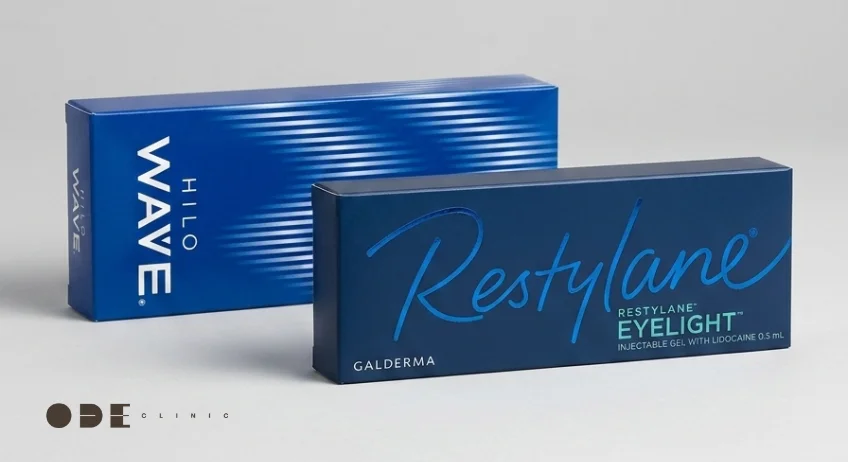
Restylane Eyelight, a dedicated under-eye filler that adheres closely to skin tissue with minimal clumping or distortion, is precisely injected in 0.01cc increments.
Learn more about Undereye Filler →
Under-Eye Hollows & Dark Circles
Under-Eye Hollows
Under-eye hollows occur when lost volume beneath the eyes creates sunken areas and shadows that make you look tired. Because the skin under the eyes is thin, changes in under-eye fat, the mid-cheek, and skin elasticity show up together, and dark circles also fall into hollow, translucent, and pigmented types. Since the right treatment depends on the cause, getting an elasticity procedure or filling volume without distinguishing your type can easily lead to disappointing results. Start by checking the condition of your under-eye area.
Last updated: 2026.11.08
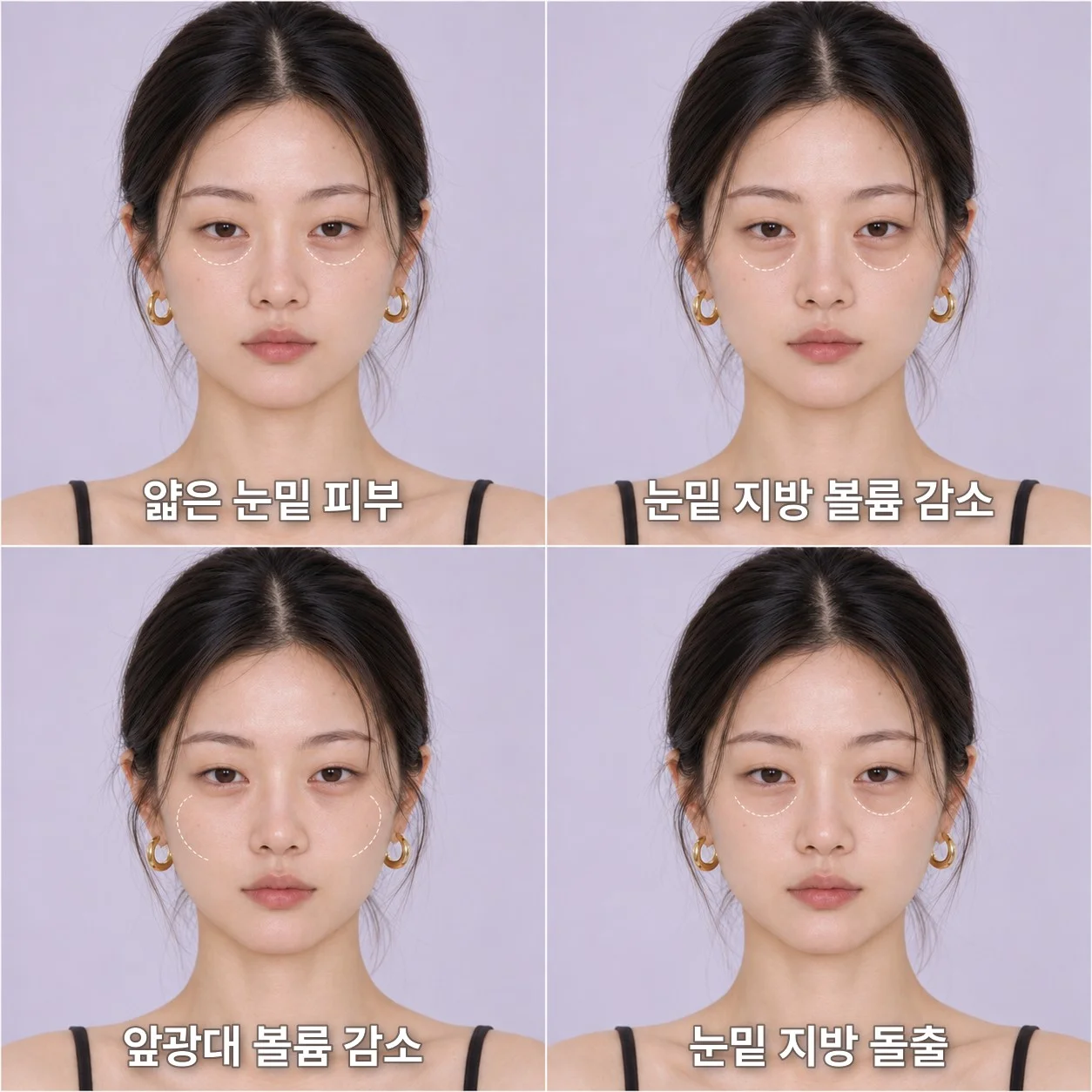
Under-eye hollows appear when changes in under-eye and mid-cheek fat are combined with naturally thin under-eye skin.
In addition, because the muscles used for blinking and the ligaments around the tear trough are densely intertwined, even 0.01cc of excess volume can clump or show as a visible bulge. Thin under-eye skin not only contributes to dark circles, but also makes even slight overfilling noticeable—which is why precise, predictable treatments are preferred.
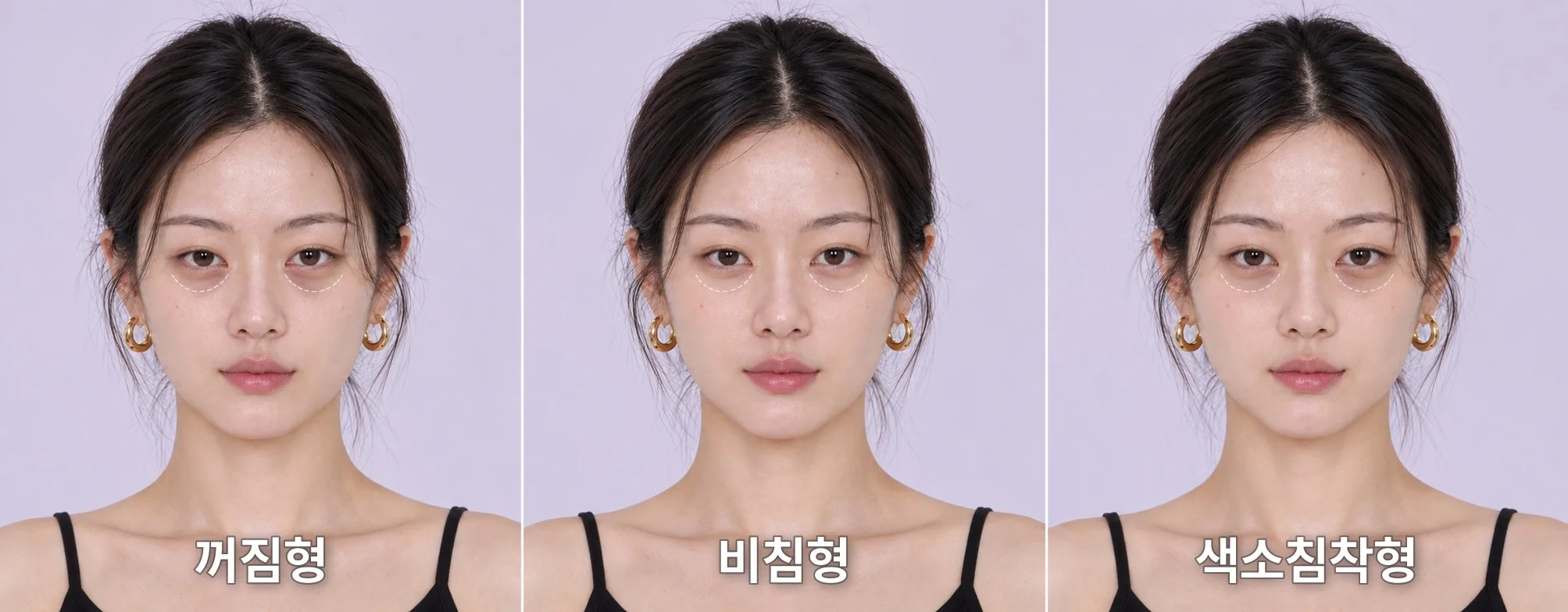
Dark circles are categorized into the hollow type (where sunken volume casts a shadow), the translucent type (where structures beneath thin skin show through), and the pigmented type (where pigment has accumulated).
| Type | Appearance | Cause |
|---|---|---|
| Hollow type | The under-eye area looks sunken and gaunt, sometimes accompanied by protruding under-eye fat | Reduction and sagging of supporting under-eye fat, lack of mid-cheek volume |
| Translucent type | The under-eye area appears bluish, reddish, or purplish | Blood vessels and muscle showing through thin skin |
| Pigmented type | The skin from beneath the eyes toward the nasal bridge looks brownish or darkened | Melanin pigmentation caused by friction such as frequent eye rubbing |
Volume-restoring treatments suit the hollow type, whereas the translucent type, pigmented type, and fine lines require different approaches. If skin elasticity is significantly reduced, an elasticity procedure may be performed first—so your treatment plan is designed after a 1:1 consultation with the treating physician to examine your under-eye condition.
Recommended for:
Restylane Eyelight, a dedicated under-eye filler that adheres closely to skin tissue with minimal clumping or distortion, is precisely injected in 0.01cc increments.
Learn more about Undereye Filler →
A fluid formulation combining high- and low-molecular-weight hyaluronic acid adds volume with minimal foreign-body sensation while improving skin elasticity.
Learn more about HILO WAVE →
Made of fine dissolvable thread particles that break down quickly in the body, it induces collagen synthesis while lowering the risk of firm nodules.
Learn more about Ultracol 200 →
Using fine-particle RE2O Fine, it directly replenishes human-derived collagen and elastin to improve elasticity and hollowing in the thin under-eye area.
Learn more about RE2O →Under-eye hollows are usually accompanied by mid-cheek hollowing, so building the mid-cheek foundation first before filling the under-eye area creates a natural result. Because restoring the mid-cheek changes the line of the tear trough, the mid-cheek is filled first with products such as Restylane Volyme or Juvéderm Voluma, and the tear trough is then finished with Restylane Eyelight.
Comfortable with filler treatments?
We first recommend Restylane Eyelight, which can be precisely filled to the desired amount, holds its shape well, and can be dissolved and adjusted at any time.
Mild hollowing and hesitant about filler?
You can start lightly with HILO WAVE, which has a fluid consistency for minimal foreign-body sensation and absorbs naturally over about 6 months.
Prefer a collagen booster?
Subtly replenish the under-eye area with Ultracol 200, a dissolvable thread formula with low nodule risk, or fine-particle RE2O Fine.
Sunken mid-cheek as well?
Build the mid-cheek foundation first with ODE Filler, then smoothly blend the remaining tear trough with Restylane Eyelight.
What determines a natural look is not as much what product is used as how much is filled. For most under-eye areas, 0.5cc is sufficient, and results look natural when we avoid overfilling and restore only about 50–70% of the missing volume.
We do not recommend collagen biostimulators such as Juvelook Volume, Sculptra, or Radiesse for the under-eye area. Because it is difficult to predict how much autologous collagen will build up, even slight overproduction in the thin under-eye skin—where a 0.01cc difference is visible—can look puffy or be felt as firm nodules. Furthermore, the particles remain in the body for a long time, and once collagen volume has formed, there is no way to dissolve and reverse it like filler. If you strongly prefer a collagen-regenerating treatment, Ultracol 200—which breaks down quickly in the body within around 6 months and forms collagen in smaller units—can serve as an alternative.
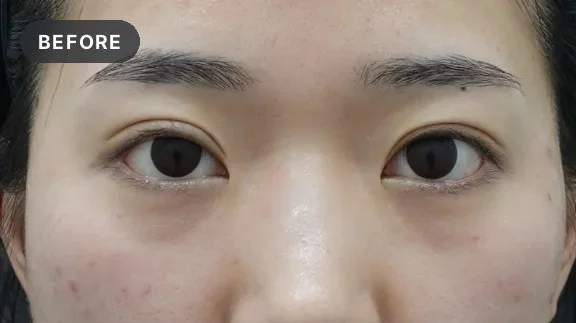
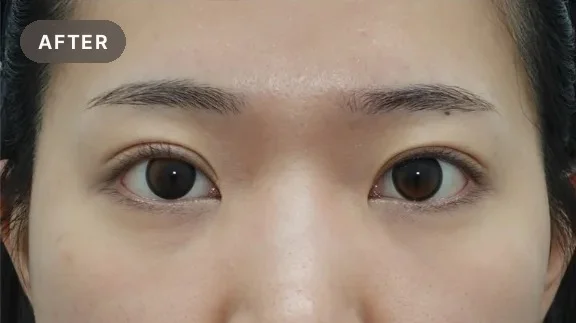
Before and after photos are available after logging in.
ODE Clinic complies with medical laws.
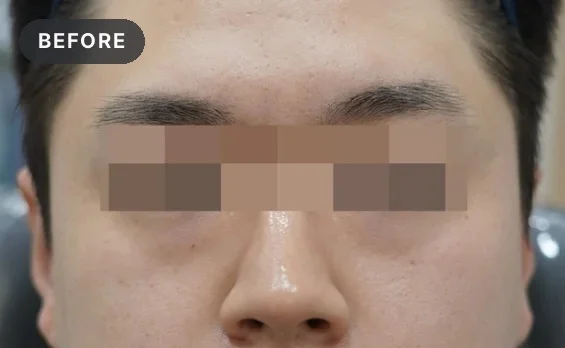
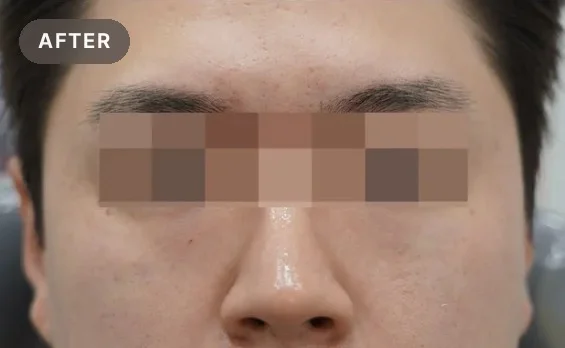
Before and after photos are available after logging in.
ODE Clinic complies with medical laws.
Restylane Eyelight, a filler designed specifically for the under-eye area, has small particles and high elasticity; rather than clumping together, it adheres closely to skin tissue and does not draw in excess water, minimizing shape distortion. When an appropriate amount is injected into the exact anatomical plane, there is very little chance of it sagging or migrating to other areas over time. If skin elasticity is significantly reduced, slight clumping may occasionally occur, which can be corrected with a touch-up at a follow-up visit 2 weeks later.
Hyaluronic acid treatments such as Restylane Eyelight and HILO WAVE break down into carbon dioxide and water over time and disappear naturally. If you are unhappy with the result or need correction, they can also be dissolved and adjusted at any time using an enzyme. By contrast, collagen biostimulators remain in the body longer, and collagen volume that has already formed cannot be dissolved or reversed.
If under-eye fat bulges severely, surgical under-eye fat repositioning may be needed to reduce the size of the protruding fat. On the other hand, for simple hollowing where there is not enough fat to reposition, or when protrusion is mild, filling the surrounding sunken areas with filler to mask the step-off is enough to create a smooth improvement. Even after surgery, sunken areas often still need volume restoration, and you can always undergo under-eye fat repositioning surgery later on even after having filler.
Undereye Filler and ODE Filler last 1 to 1.5 years, HILO WAVE lasts around 6 months, Ultracol 200 lasts about 1 year, and RE2O lasts 1 year after 3 sessions. For maintenance, we recommend a touch-up every 1 year for fillers, 2 sessions spaced 6 months apart for HILO WAVE, and 3 sessions spaced 1 month apart followed by annual touch-ups for Ultracol 200.
For hollow-type dark circles where volume loss casts shadows beneath the eyes, restoring the missing volume can lighten both the tear trough line and the dark shadow together. However, for the translucent type—where blood vessels and muscle show through the skin—or the pigmented type caused by friction, the underlying cause is different, so volume treatments alone have limitations. If fine lines and reduced elasticity under the eyes are also present, elasticity procedures such as RE2O Fine, Eye Thermage, or Eye Density are performed first or combined to complement the result.
Pricing varies depending on the treatment type, dosage, and number of sessions. You can check the price of each procedure on the individual treatment pages and the Events & Pricing page.

Even for minor procedures, the doctor performing your treatment conducts your consultation in person. Together, you’ll review your skin using a diagnostic skin analyzer, carefully weigh whether the procedure is truly needed or if another option would suit you better, and build your treatment plan from there.

Our care doesn’t end with the procedure. We take before-and-after images with a diagnostic skin analyzer to compare your results, and the doctor who performed your treatment personally conducts your follow-up consultation.

We are not a "factory-style" clinic where you might end up with an inexperienced doctor. The medical team at ODE Clinic shares clinical cases and technical know-how based on their vast experience to continuously advance their skills.
Check out ODE Clinic's transparent, reasonable pricing and various special events.