Hilowave Longevity and Side Effects (vs. filler and juvelook volume)
Hilowave Longevity and Side Effects (vs. filler and juvelook volume)
May 11, 2026
First published / Last modified

Table of Contents
Hello, I am Dr. Do hoon Kim from ODE clinic. Recently, hilowave has been gaining significant popularity. As a dual hyaluronic acid (HA) formula, it provides a natural-looking volume with minimal foreign body sensation while simultaneously offering deep hydration.
However, some patients express concerns regarding its relatively short longevity and potential side effects. Today, I’d like to share my honest professional insights based on my clinical experience with hilowave.
💡 Related article: Hilowave treatment reviews, vs. juvelook, before and after, side effects
Why Does Hilowave Have a Shorter Longevity?
Unlike traditional hyaluronic acid fillers, hilowave contains a significantly lower amount of BDDE (a cross-linking agent).
Because of this, its consistency is more fluid and soft. This allows for a much more natural volume and a smoother feel under the skin. 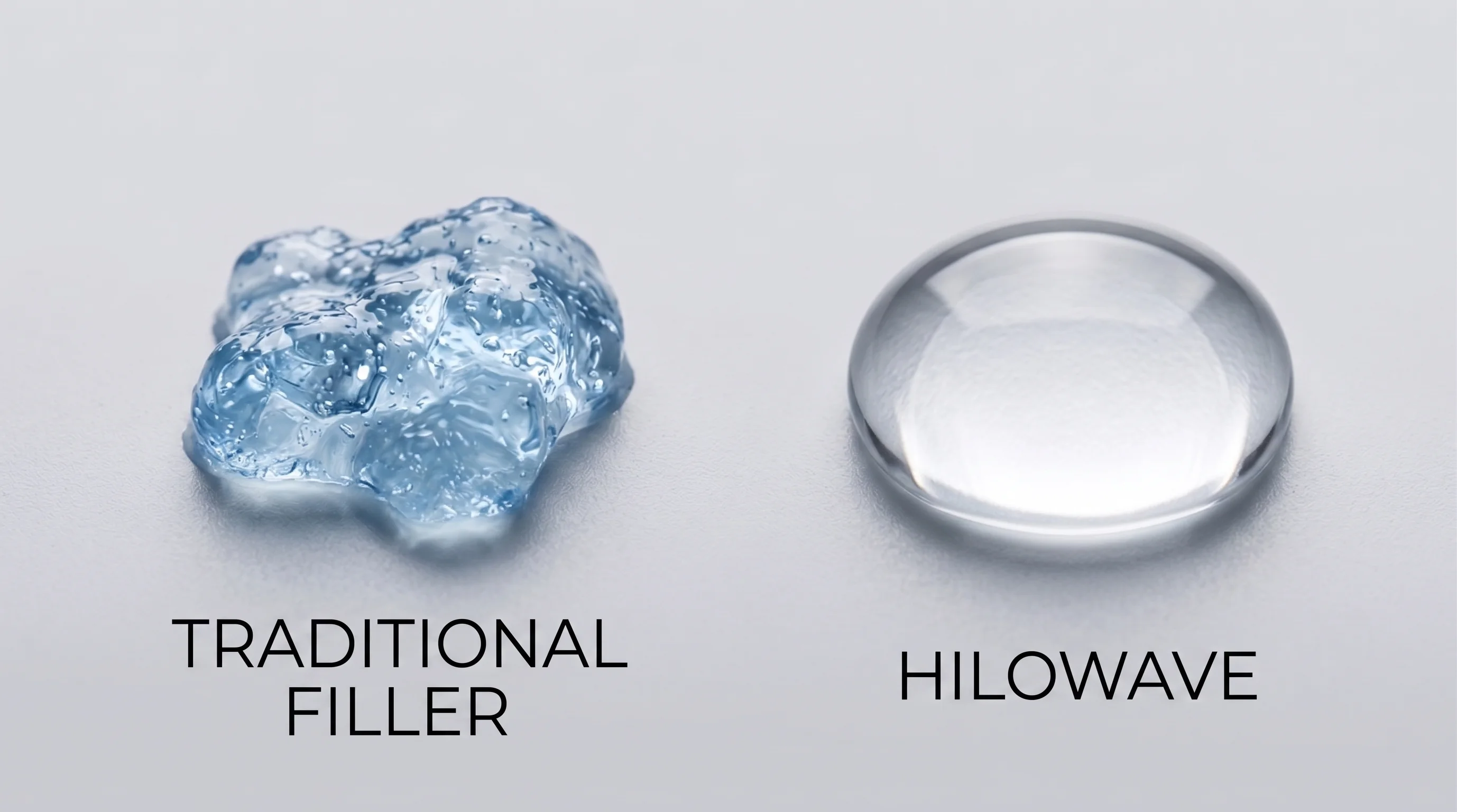 However, this same characteristic means the body breaks down and absorbs the material faster than highly cross-linked fillers.
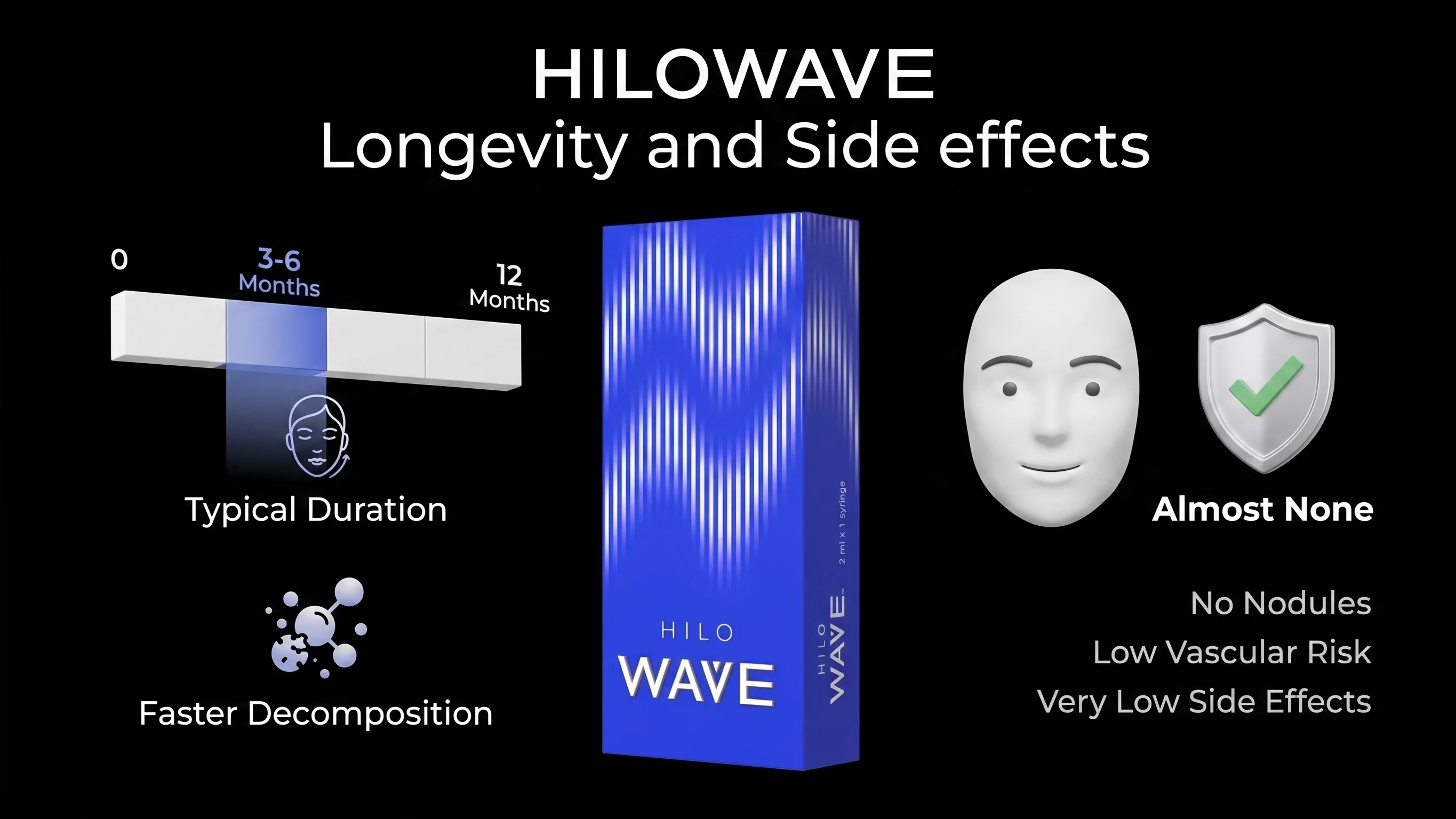
While traditional fillers are often expected to last 1 to 2 years, you should generally expect hilowave to last between 3 to 6 months, depending on the treated area.
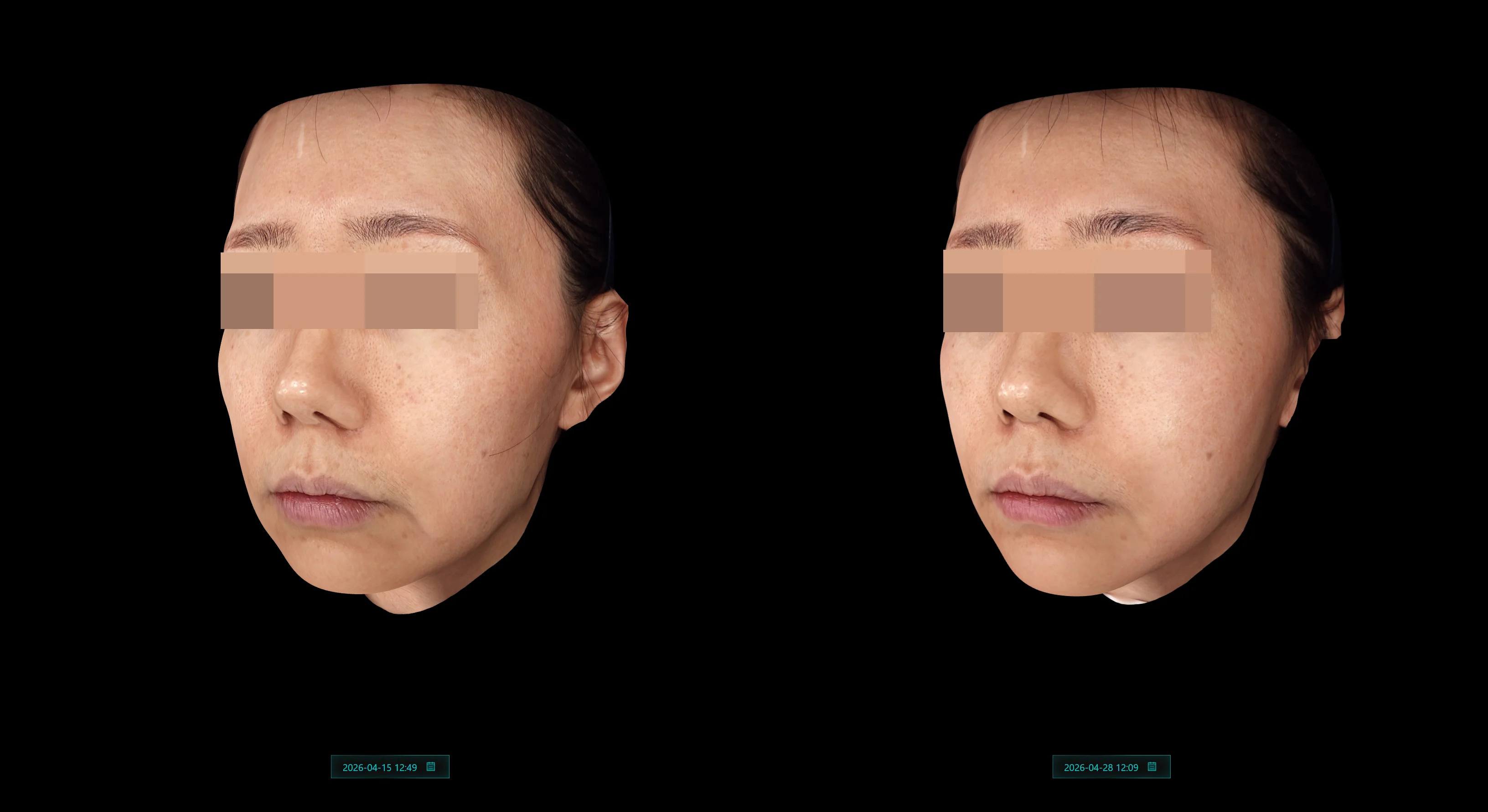
[Hilowave Before & After]
Feature | Hilowave | Traditional Fillers |
Pros | Extremely natural; no foreign body sensation; zero risk of vascular occlusion. | Long-lasting results. |
Cons | Shorter duration. | Potential for foreign body sensation or tissue necrosis if injected into a blood vessel. |
Dr. Do hoon Kim’s Clinical Notes
Longevity varies by the injection site. For areas with frequent movement, such as the nasolabial folds (smile lines), it is best to be conservative and expect the results to last about 3 months.
If you are looking for a more permanent or long-term solution, I recommend exploring treatments that stimulate collagen synthesis rather than hilowave.
Recommended Treatment Cycle and Intervals
Many patients return for a touch-up once they notice the initial volume beginning to subside. There is no strictly mandated interval for hilowave.
Some patients prefer to wait until the product is completely absorbed, while others like to maintain the peak volume by getting top-ups earlier. One of the greatest advantages of HA-based formulas like hilowave is that they can be supplemented whenever you wish and can be dissolved immediately if you are unsatisfied with the results.
Understanding Potential Side Effects
Despite its shorter duration compared to other volumizing treatments, hilowave remains a top choice for many. The primary reason is its excellent safety profile.
Fillers: While effective, they carry risks such as foreign body sensation or, in rare cases, vascular occlusion which can lead to tissue necrosis or vision loss.
Juvelook / Sculptra: These can occasionally cause "nodules" (hard lumps) if collagen over-stimulates in one area.
Hilowave: Does not carry these specific risks.
Therefore, I highly recommend hilowave for those who are new to facial volume treatments, those who have a phobia of traditional fillers, or anyone highly concerned about medical side effects.
Side Effect Comparison
Treatment | Potential Side Effect |
Fillers | Vascular Occlusion |
Juvelook / Sculptra | Nodules (Lumps) |
Hilowave | Minimal to None |
Frequently Asked Questions (FAQ)
Q. Can I return to daily activities immediately after the procedure?
A. Yes. However, minor bruising may occur in some cases, which typically resolves within 1 to 2 weeks.
Q. I have had Juvelook treatments before. Can I still get hilowave?
A. Yes, it is perfectly safe to receive hilowave even if you have had Juvelook treatments in the past.
Q. How many cc's of hilowave will I need?
A. This depends entirely on the specific area and the degree of volume loss. Since every individual's facial structure is different, it is best to decide the dosage after a detailed consultation with an experienced doctor.