The "Peanut-Shaped" Face : Causes and Expert Solutions for Sunken Cheeks
The "Peanut-Shaped" Face : Causes and Expert Solutions for Sunken Cheeks
April 12, 2026
First published / Last modified
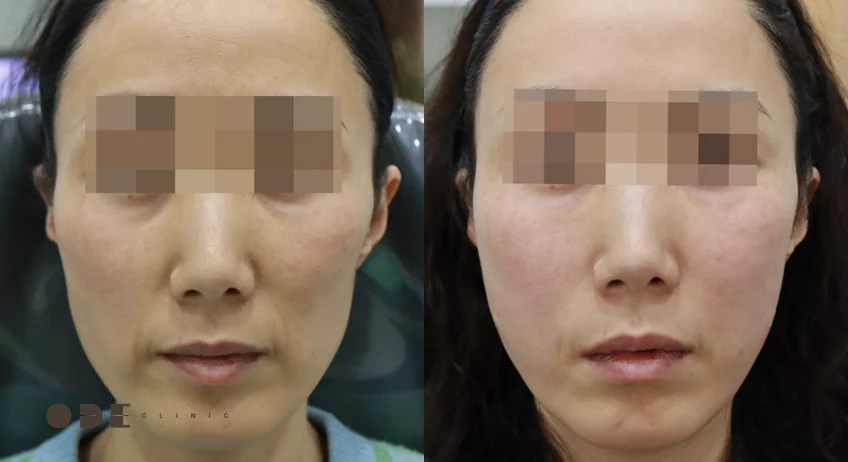
Table of Contents
Hello, I’m Dr. Do-hoon Kim, Director of Ode Clinic. Today, I’ll be discussing the "peanut-shaped face," characterized by sunken cheeks and hollow temples.
♥Related article reading: Peanut-shaped face, cheek hollow filler vs. Sculptra vs. Hilo Wave
What is a "Peanut-Shaped Face"?
"Peanut-shaped face" is not a formal medical term. However, in the field of aesthetic medicine, it is a common idiom used to describe a typical change in facial shape due to aging.
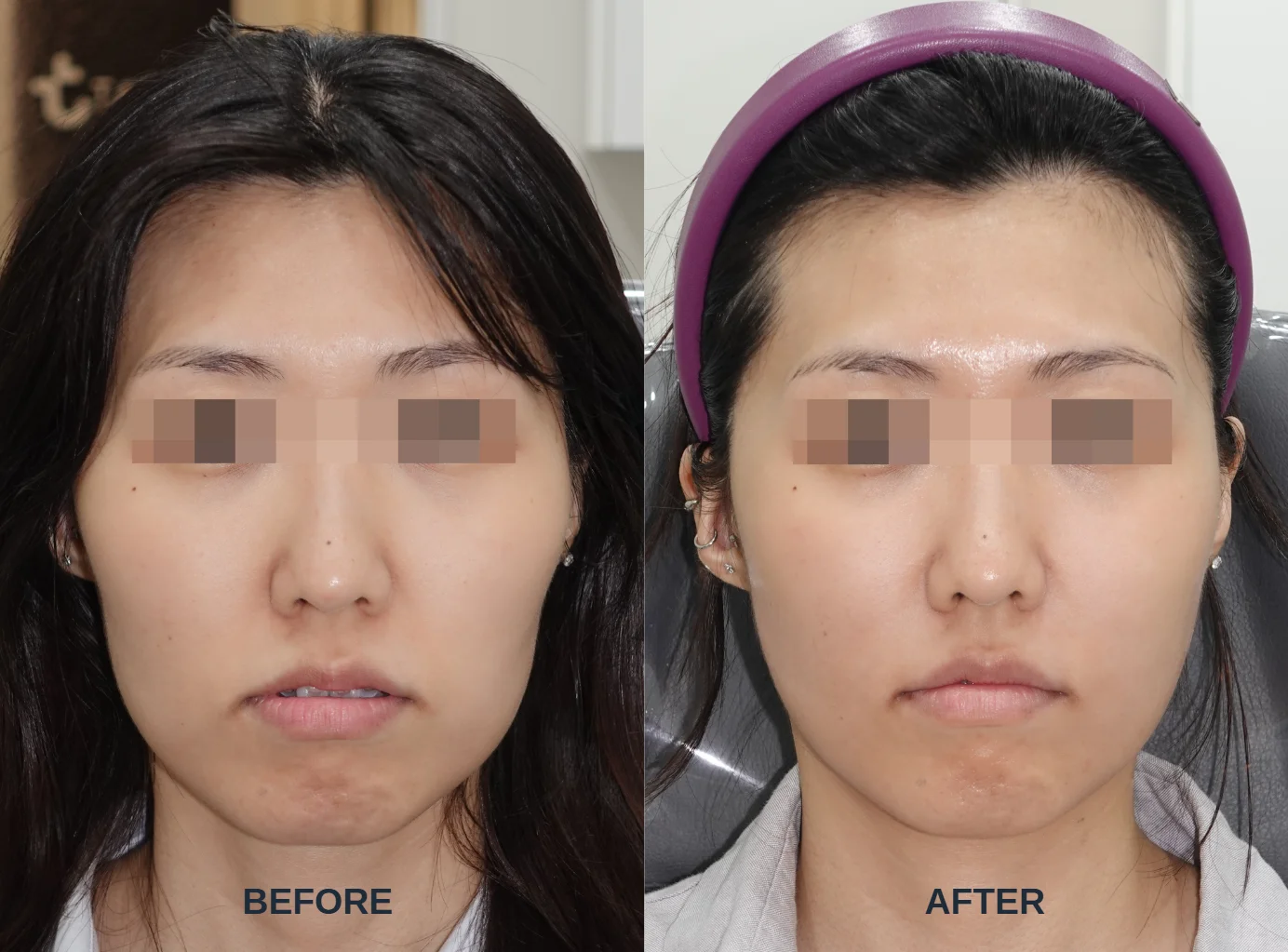
It refers to a facial contour that appears uneven or "bumpy" from the front—resembling the silhouette of a peanut shell rather than a smooth oval. Specifically, it involves the following changes:
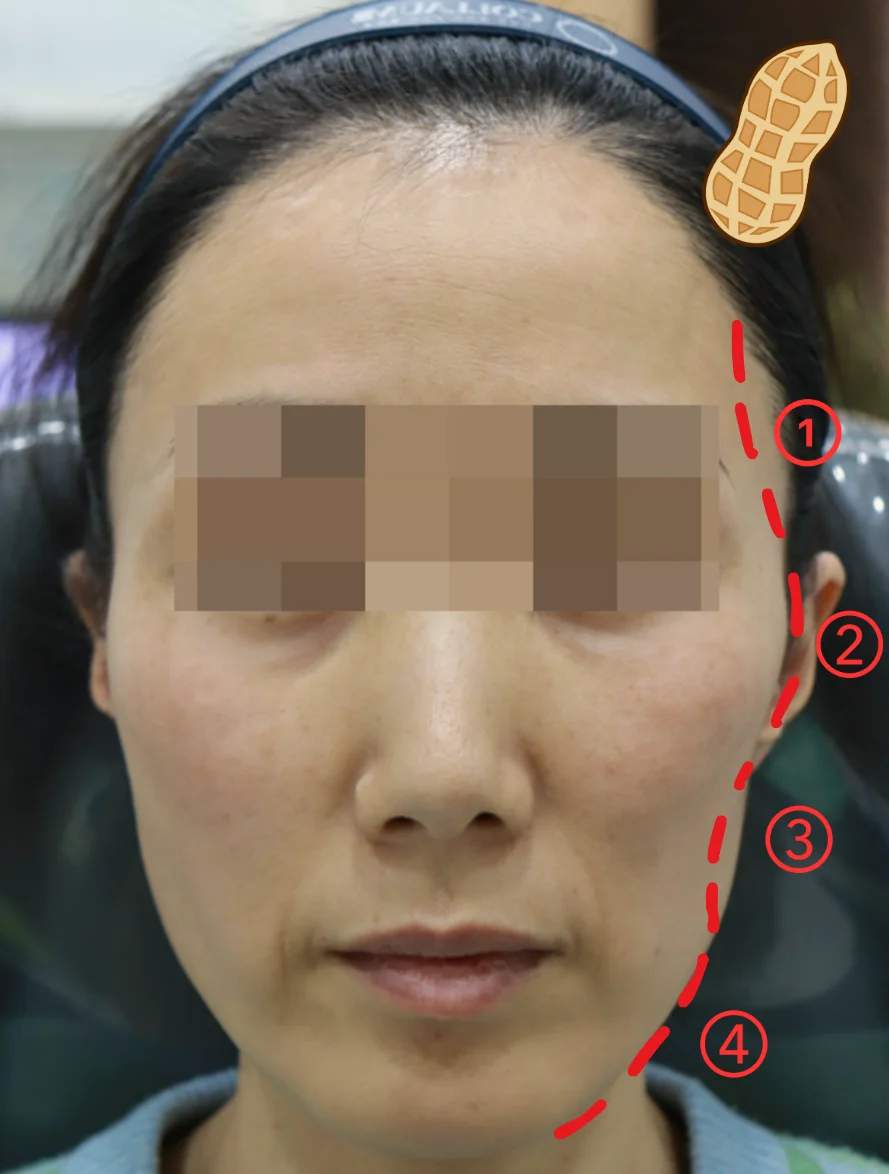
(1)Sunken Temples
(2) Zygomatic (Cheekbone) Protrusion
(3) Hollow Cheeks
(4) Sagging Jawline
As a result, the facial line looks irregular, making the face appear older and sometimes even larger than it actually is. Let’s break down the causes and solutions for each area.
Causes of a Peanut-Shaped Face by Area
(1) Sunken Temples
The temple area consists of 13 layers, including skin, fat, fascia, muscle, and bone. The primary causes of hollowing here are the atrophy of fat, muscle, and bone.
Temple Fat: Subcutaneous fat, superficial temporal fat pad, deep temporal fat pad.
Temple Muscle: Temporalis muscle.
Temple Bone: Temporal bone.
The biggest factor is aging, which leads to fat atrophy, reduced muscle volume, and bone resorption. This is a natural process, but it can be accelerated by extreme dieting or excessive Botox injections into the temporalis muscle.
(2) Zygomatic (Cheekbone) Protrusion
In most cases, protruding cheekbones are the result of congenital bone structure.
Many patients tell me,
"Doctor, I feel like my cheekbones are getting bigger as I age."
However, cheekbones actually get smaller over time due to bone resorption. They only appear more prominent because the surrounding areas—the temples and cheeks—hollow out, creating a relative protrusion.
(3) Hollow Cheeks
Hollowing typically occurs in the "lateral cheek" area, just below the zygoma. This happens because fat tissue sags downward over time due to gravity.
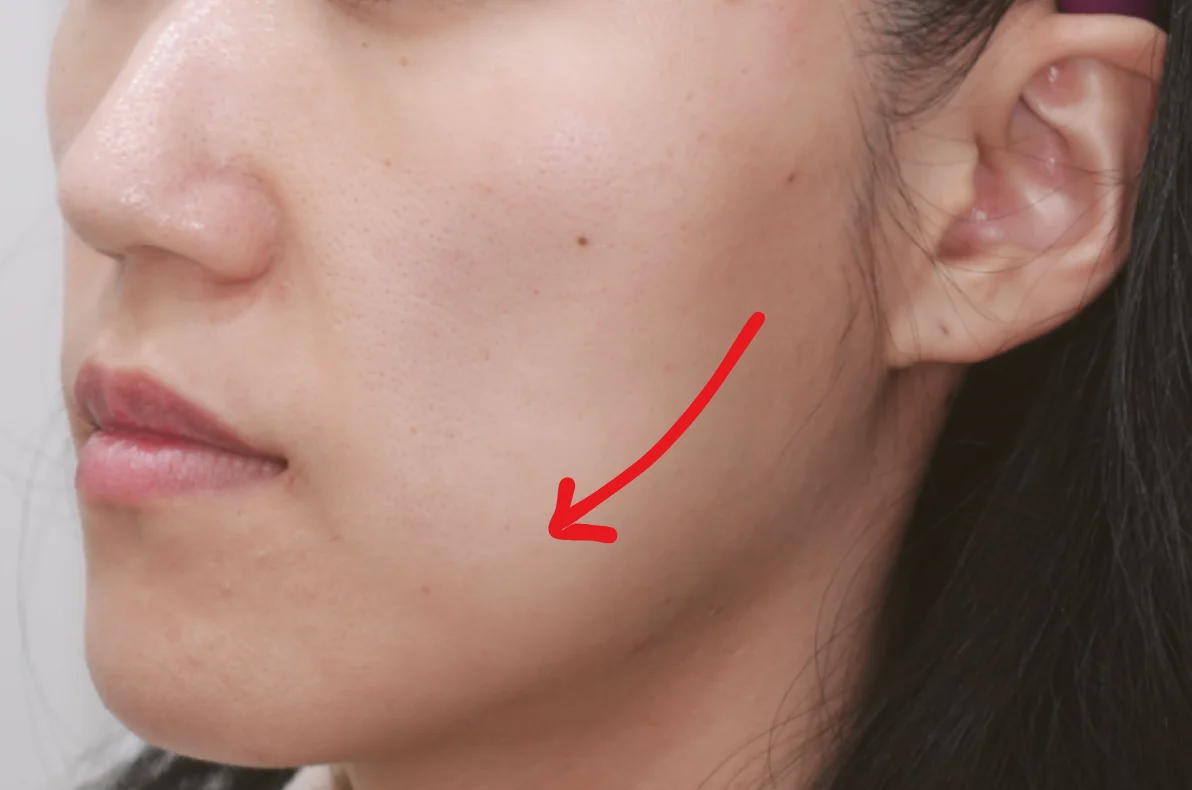
Notably, the buccal fat, which provides youthful volume, shifts downward, leaving the original space empty. (This is why people stressed about "chubby cheeks" in their 20s often find themselves stressed about the lack of cheek volume in their 30s and 40s.)
Other factors that accelerate cheek hollowing include:
Weakening Support Structures: Facial contouring surgery, orthodontics, or excessive jaw Botox.
Fat Atrophy: Buccal fat removal, side effects from lifting procedures (like Ultherapy), or fat-dissolving injections.
If you notice hollowing, the priority should be avoiding these causes. When performing Ultherapy, a customized design is essential to prevent unwanted fat loss in this area.
(4) Sagging Jawline
Fat tissue that has migrated downward makes the jawline look heavy and further emphasizes cheek hollowing. Like other symptoms, this is caused by natural aging, facial surgery, dental braces, or excessive Botox.
Treatments for a Peanut-Shaped Face
To improve a peanut-shaped contour, we need to fill the hollows and reduce the protrusions or sagging.
(1) Sunken Temples
Fillers:
The temple is an excellent area for fillers. Because there is little movement, the filler stays in place and lasts a long time.
Since much of the volume is placed deeply, it feels very natural. However, it requires a high level of skill, so it's important to seek an experienced doctor. I usually recommend 2–4cc depending on the depth.Collagen Stimulators (Juvelook Volume, Sculptra, Olidia):
These products promote natural volume through collagen synthesis. However, since the amount that can be injected in one session is limited to prevent nodules, the results are more subtle and less "dramatic" compared to fillers.
<Summary>
Fillers: Safe and highly effective for immediate results.
Collagen Stimulators: Subtle and natural, though less powerful for volume.
(2) Zygomatic Protrusion
In most cases, the bone is large. However, if soft tissue is present above the bone upon palpation, there is a possibility that it may shrink.
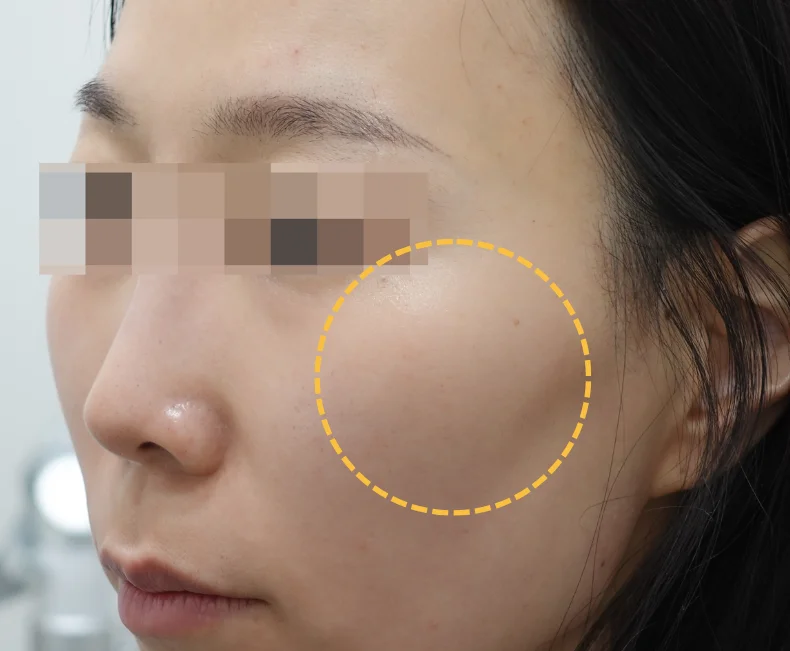
HIFU (Ulthera, Coolsonic, Shurink): High-Intensity Focused Ultrasound creates thermal coagulation points in the fat and SMAS layers to induce immediate contraction. For the side cheekbones, about 100 shots of Ultherapy are recommended for precision.
XERF: A monopolar RF device that uses a 2MHz frequency to deliver deep thermal energy, contracting collagen bundles. It works best when combined with HIFU.
Fat-Dissolving Injections: An option if there is significant localized subcutaneous fat over the bone.
<Summary>
HIFU: Excellent for precise contouring and lifting.
XERF: Synergistic when combined with other lifting treatments.
(3) Hollow Cheeks
This area often shows the most dramatic improvement. I highly recommend addressing cheek hollows to fix the peanut shape.
Fillers:
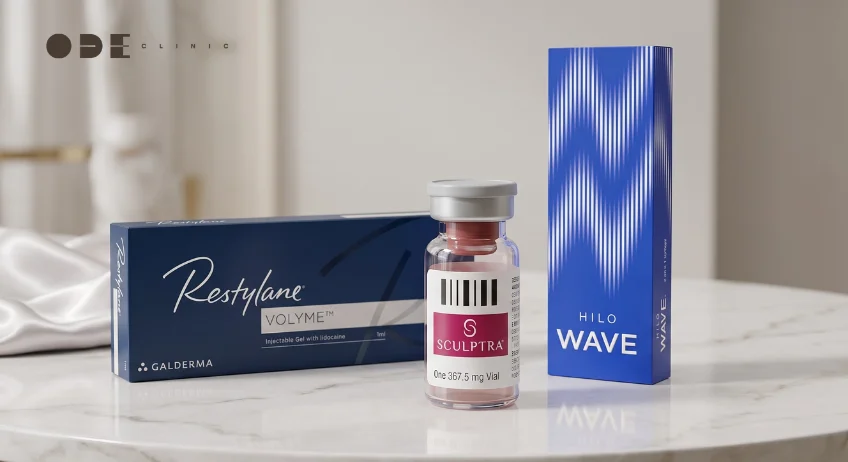
These are hyaluronic acid fillers capable of creating the most immediate and dramatic volume. For cheek hollows, products such as Juvederm Voluma and Restylane Volim are used.The advantages include the ability to fill volume exactly as intended by the practitioner, predictability, and the ability to dissolve the filler at any time if desired.
However, cheek hollows are typically extensive, and if the depression is severe, a larger volume may be required. A disadvantage of using a large volume is that it can cause a severe foreign body sensation, or the injected filler may spread or migrate.
Therefore, for extensive and significant cheek hollows, it is advisable to first treat the area with a collagen stimulator and then consider using fillers for the remaining depression later.
Juvelook Volume / Sculptra:
This method induces autologous collagen synthesis and the differentiation and proliferation of autologous fat cells to fill the area with your own tissue. Since it causes minimal foreign body sensation, it is highly suitable for large, deep sunken cheeks. There is almost no risk of the area shifting or changing shape over time, and it also improves skin elasticity.The downsides are that it takes a long time for the effects to appear, requires multiple treatments, and it is difficult to predict how much volume will be added.
People often think that Juvereux Volume, Sculptra, and Olidia are more natural than fillers, but in reality, what determines naturalness is not what is used, but how much volume is added. Since most of these methods add less volume than fillers, they inevitably appear more natural.
Therefore, although the effects may appear less pronounced than with fillers, they are a highly suitable option for those who desire long-lasting volume with minimal foreign body sensation.
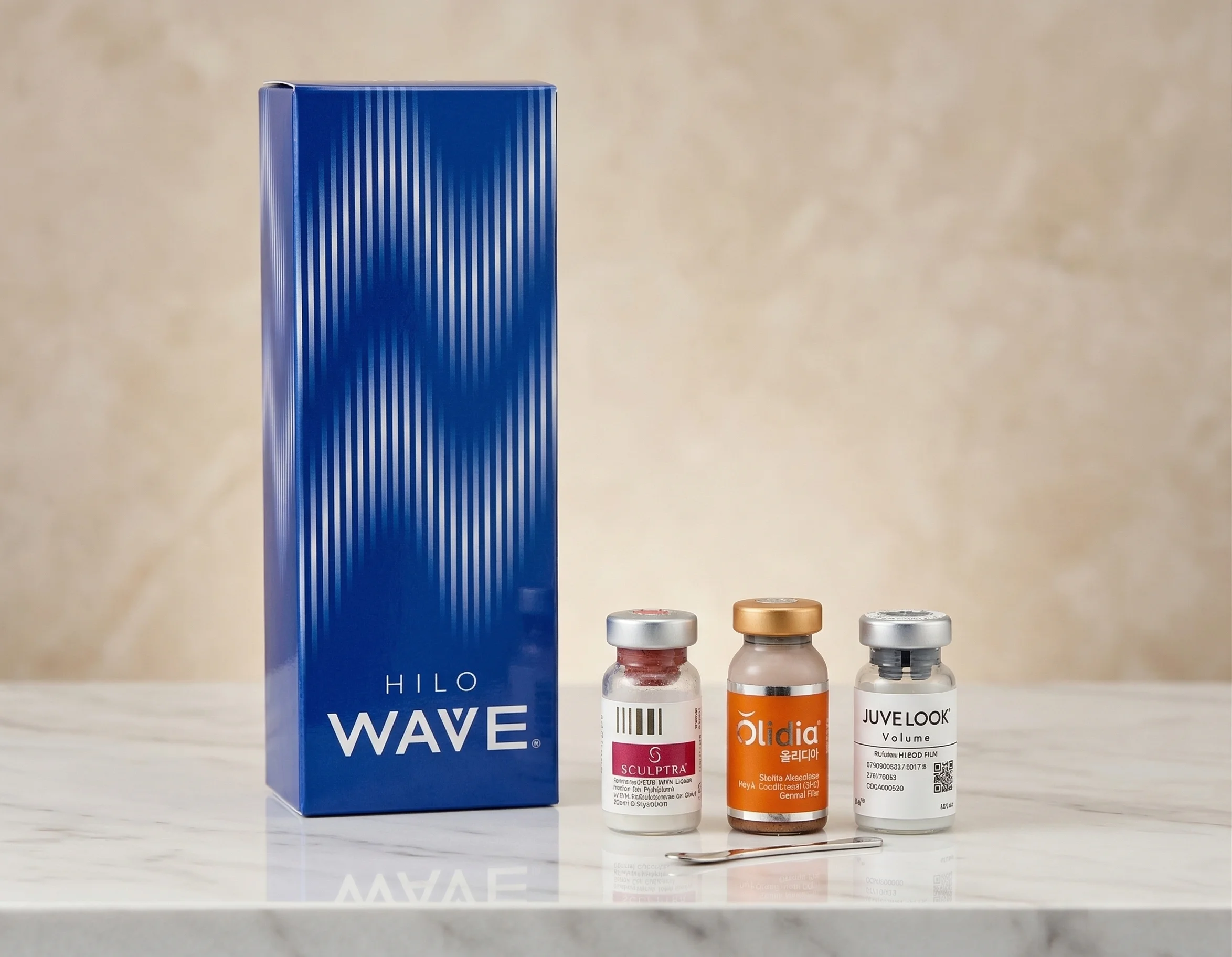
Hilowave:
Hilowave is a recently launched hyaluronic acid filler consisting of a combination of low and high molecular weight molecules. While some doctors introduce it as a "biostimulator" rather than a filler, I consider it a filler.However, unlike traditional hyaluronic acid fillers such as Juvederm and Restylane, it is unique in that it features minimal cross-linking and is a mixture of low and high molecular weight hyaluronic acid. Simply put, you can think of it as having low elasticity and a fluid consistency. Because of its fluid consistency, it feels almost like a foreign body even when injected into large areas. However, since its ability to maintain shape is lower, it is difficult to use in areas that require firm support, such as the nose or chin. On the other hand, it is an effective option for filling in deep hollows in the cheeks.
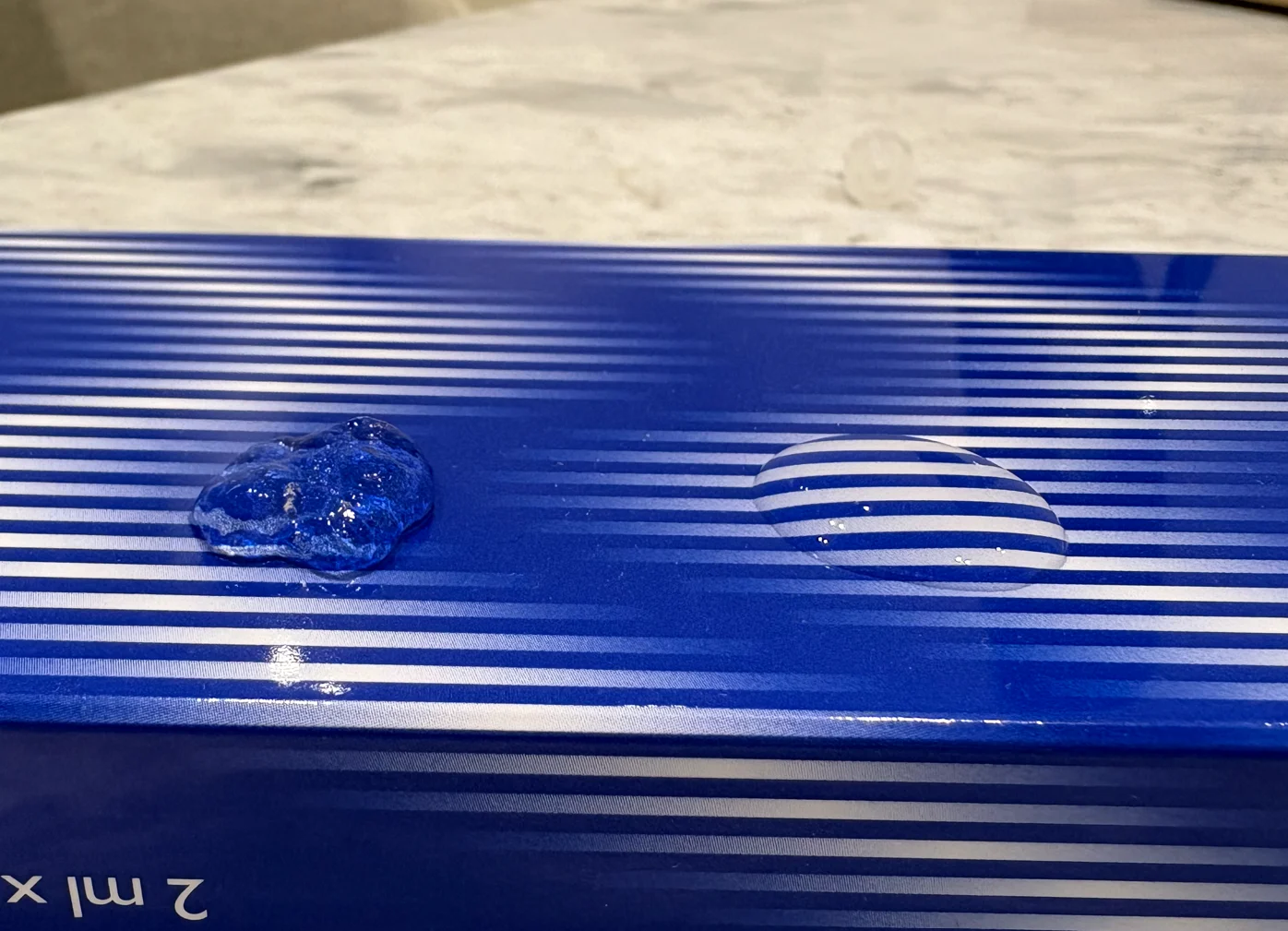 <Left: Filler, Right: Hilowave>
Not only is immediate volume improvement possible, but as low-molecular-weight hyaluronic acid is absorbed into the skin, it also induces collagen synthesis and improves elasticity. You could say it is an option that falls somewhere between the fillers mentioned above and Juvereux Volume, Sculptra, and Olidia.
I recommend this to those with sunken cheeks who desire quick results. Although the duration of effect is relatively short, lasting about 6 months, the area does not completely collapse and some of the body's own collagen remains; therefore, I recommend receiving the treatment about twice at 6-month intervals.
<Summary>
Fillers: Immediate and certain, but can feel heavy if overused.
Collagen Stimulators: Long-lasting and improves texture, but results take time.
Hilowave: A hybrid option offering both immediate volume and collagen synthesis.
(4) Sagging Jawline
- HIFU Lifting Procedures such as Ulthera, CoolSonic, and Shurink
High-intensity focused ultrasound is always the foundation of lifting procedures. While it has the disadvantage of causing severe pain as thermal coagulation points form closer to the bone the closer the treatment is to the jawline, the visible results tend to be dramatic. Assuming the procedure is performed with Ultherapy, we recommend approximately 300 to 400 shots for the jawline.
- XERF
XERF is a radiofrequency procedure that applies thermal energy to a wide area to contract fibrous septa. It is quite effective for the jawline and creates excellent synergy when combined with procedures that induce fat cell apoptosis.
- Onda Lifting
Onda Lifting utilizes microwaves to induce fat breakdown. Unlike HIFU devices such as Ulthera, it has the advantage of minimal pain and downtime. (In fact, many patients come in for the procedure during their lunch break.) Fat cells are gradually broken down over approximately one month after the procedure.
- Fat Dissolving Injections
Those with a lot of excess fat can maximize the improvement effect by combining fat dissolving injections.
Peanut-Shaped Face: FAQ
Q: Can I just get a Thread Lift instead of filling hollows and lifting sagging areas separately?
A: While it’s tempting to think a thread lift will solve everything, it’s impossible to physically pull sagging fat back to its original position. Threads primarily hook onto the fascia, not fat cells. It can offer a temporary "quick fix," but it’s not a standalone solution for a peanut-shaped face.
Q: Won't filling my cheeks make my face look bigger?
A: Technically, you are adding volume, but most patients report their face looking smaller. This is because smoothing out the "bumpy" contour creates a more compact and youthful visual silhouette. If you are worried about width, we can focus on a natural fill combined with lifting for the lower face.
Q: Does the order of treatments matter?
A: Not necessarily. If you are hesitant about fillers, you can start by reducing the cheekbones and jawline first. Reducing the "peaks" often makes the "valleys" (hollows) look less prominent.
Related Posts
Hilo Wave for Hollow Cheeks: Why Juvelook Volume Might Not Be Enough

Hilowave treatment reviews, vs. juvelook, before and after, side effects
The Essential Guide to Juvelook Volume: Results, Costs, and How to Avoid Side Effects